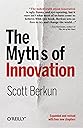
The Myths of Innovation
Product ID: 1274351
Desertcart purchases this item on your behalf and handles shipping, customs, and support to Sri Lanka.
In this new paperback edition of the classic bestseller, you'll be taken on a hilarious, fast-paced ride through the history of ideas. Author Scott Berkun will show you how to transcend the false stories that many business experts, scientists, and much of pop culture foolishly use to guide their thinking about how ideas change the world. With four new chapters on putting the ideas in the book to work, updated references and over 50 corrections and improvements, now is the time to get past the myths, and change the world. You'll have fun while you learn: Where ideas come from The true history of history Why most people don't like ideas How great managers make ideas thrive The importance of problem finding The simple plan (new for paperback) Since its initial publication, this classic bestseller has been discussed on NPR, MSNBC, CNBC, and at Yale University, MIT, Carnegie Mellon University, Microsoft, Apple, Intel, Google, desertcart.com, and other major media, corporations, and universities around the world. It has changed the way thousands of leaders and creators understand the world. Now in an updated and expanded paperback edition, it's a fantastic time to explore or rediscover this powerful view of the world of ideas. "Sets us free to try and change the world." --Guy Kawasaki, Author of Art of The Start "Small, simple, powerful: an innovative book about innovation." --Don Norman, author of Design of Everyday Things "Insightful, inspiring, evocative, and just plain fun to read. It's totally great." --John Seely Brown, Former Director, Xerox Palo Alto Research Center (PARC) "Methodically and entertainingly dismantling the cliches that surround the process of innovation." --Scott Rosenberg, author of Dreaming in Code ; cofounder of Salon.com "Will inspire you to come up with breakthrough ideas of your own." --Alan Cooper, Father of Visual Basic and author of The Inmates are Running the Asylum "Brimming with insights and historical examples, Berkun's book not only debunks widely held myths about innovation, it also points the ways toward making your new ideas stick." --Tom Kelley, GM, IDEO; author of The Ten Faces of Innovation Review: One word - Brilliant!!!!! - Where do I start? This would have to be the best book I have read in recent times. Seriously good! I started this book on Monday and finished it today (Thursday). For me that's seriously quick, I couldn't put the thing down. I was hooked, engaged and excited by what I read, but what's it all about you ask? Obviously innovation, but Scott Berkun delves much deeper, discussing what innovation really is - this was seriously interesting. Without giving to much away, he suggests it's a term we probably use too much (you know one of those buzzwords we throw around - sounds good but do we really innovate). Secondly, the book is about believing in yourself and how to stimulate your thinking to come up with ideas, which may one day provide a solution to a problem that makes you money. Scott Berkun covers everything from idea generation, including environments which are likely to foster such ideas, to pitching ideas to your boss and venture capitalists, to maintaining your motivation, to understanding how culture and mindsets can thwart even the very best ideas and everything else in between. He provides tools, examples and much more to help you do/overcome all of this. I found this book easy to read and well referenced, which gave it credibility. Scott Berkun does a brilliant job of revealing just how many of the world's greatest innovations (Internet & others) and most successful companies (Google, Apple & others) made it where they have. He cites hard work and determination amongst other things as being responsible for helping them to where they are. He believes though we are all capable of such great feats and provides a great deal of insight, giving I'm sure any reader a boost in confidence. Of most interest was the real stories behind how it all started for these individuals and companies. Scott suggests it all starts with an IDEA. That's it, a simple idea but for it to be realised and potentially one day be successful, you must do something about it and make that idea happen. He suggests no idea happens if all you do is think about it. You must do something about it. I found knowing the real stories behind these companies very refreshing, rather than the version often cited in mainstream media. Whether you're in business, want to be in business, have an idea or have a dream you wish to realise, then this book might just be for you. I know Scott has certainly re-ignited my desire to stop talking and start doing. Review: The Fact and Fiction of Innovation - I immediately liked this book after reading the "Commitment to research accuracy" page near the front. Any author who goes above and beyond in their effort to provide the most accurate information they can and even provides a link to report inaccuracies cares about his readers and this resonates throughout the rest of the book. Mr. Berkun has clearly been on a quest to discover not only the basics of creative thinking, but how it relates to entrepreneurs and invention. Using this bottom up approach to innovation allows him to target 10 myths of innovation and analyze them so we can understand where they came from and how to avoid them. Each myth is allotted its own chapter and they are as follows (along with my quick thoughts on each chapter): 1. The myth of epiphany (epiphany looks like hard work and wears overalls) 2. We understand the history of innovation (the victors write the history) 3. There is a method for innovation (great chapter, worth the price of whole book) 4. People love new ideas (great ideas usually don't look great, ask Google) 5. The lone inventor (one of my favorite chapters - nobody goes it alone) 6. Good ideas are hard to find (have more ideas, have crazy ideas, have no fear with your ideas) 7. Your boss knows more about innovation than you (don't confuse power with creativity) 8. The best ideas win (winning isn't based on how good the idea is) 9. Problems and solutions (problems matter and how you define them matters more) 10. Innovation is always good (unintended consequences matter) Berkun closes the book with chapters on hype and history, creative thinking hacks, how to pitch an idea and how to stay motivated. His aside in the hype and history chapter that "if you want to be creative, you must create things" is at first glance simple advice, but for me it speaks to the core message of this book: if you want to get anything out of this book you have to do something. He has provided the roadmap, we have to begin the journey. Finally, Berkun does an excellent job of not only listing sources in each chapter (which is nirvana for those willing to further explore original source material), but his "Research and recommendations" appendix, specifically the ranked bibliography, were outstanding ideas and deserve special mention. A definite must read for anyone interested in innovation, ideas, creativity and not only what not to do, but what to do on their innovation journey.

| Best Sellers Rank | #554,218 in Books ( See Top 100 in Books ) #1,008 in Systems & Planning #2,747 in Business Management (Books) #4,133 in Leadership & Motivation |
| Customer Reviews | 4.4 out of 5 stars 323 Reviews |
J**E
One word - Brilliant!!!!!
Where do I start? This would have to be the best book I have read in recent times. Seriously good! I started this book on Monday and finished it today (Thursday). For me that's seriously quick, I couldn't put the thing down. I was hooked, engaged and excited by what I read, but what's it all about you ask? Obviously innovation, but Scott Berkun delves much deeper, discussing what innovation really is - this was seriously interesting. Without giving to much away, he suggests it's a term we probably use too much (you know one of those buzzwords we throw around - sounds good but do we really innovate). Secondly, the book is about believing in yourself and how to stimulate your thinking to come up with ideas, which may one day provide a solution to a problem that makes you money. Scott Berkun covers everything from idea generation, including environments which are likely to foster such ideas, to pitching ideas to your boss and venture capitalists, to maintaining your motivation, to understanding how culture and mindsets can thwart even the very best ideas and everything else in between. He provides tools, examples and much more to help you do/overcome all of this. I found this book easy to read and well referenced, which gave it credibility. Scott Berkun does a brilliant job of revealing just how many of the world's greatest innovations (Internet & others) and most successful companies (Google, Apple & others) made it where they have. He cites hard work and determination amongst other things as being responsible for helping them to where they are. He believes though we are all capable of such great feats and provides a great deal of insight, giving I'm sure any reader a boost in confidence. Of most interest was the real stories behind how it all started for these individuals and companies. Scott suggests it all starts with an IDEA. That's it, a simple idea but for it to be realised and potentially one day be successful, you must do something about it and make that idea happen. He suggests no idea happens if all you do is think about it. You must do something about it. I found knowing the real stories behind these companies very refreshing, rather than the version often cited in mainstream media. Whether you're in business, want to be in business, have an idea or have a dream you wish to realise, then this book might just be for you. I know Scott has certainly re-ignited my desire to stop talking and start doing.
G**S
The Fact and Fiction of Innovation
I immediately liked this book after reading the "Commitment to research accuracy" page near the front. Any author who goes above and beyond in their effort to provide the most accurate information they can and even provides a link to report inaccuracies cares about his readers and this resonates throughout the rest of the book. Mr. Berkun has clearly been on a quest to discover not only the basics of creative thinking, but how it relates to entrepreneurs and invention. Using this bottom up approach to innovation allows him to target 10 myths of innovation and analyze them so we can understand where they came from and how to avoid them. Each myth is allotted its own chapter and they are as follows (along with my quick thoughts on each chapter): 1. The myth of epiphany (epiphany looks like hard work and wears overalls) 2. We understand the history of innovation (the victors write the history) 3. There is a method for innovation (great chapter, worth the price of whole book) 4. People love new ideas (great ideas usually don't look great, ask Google) 5. The lone inventor (one of my favorite chapters - nobody goes it alone) 6. Good ideas are hard to find (have more ideas, have crazy ideas, have no fear with your ideas) 7. Your boss knows more about innovation than you (don't confuse power with creativity) 8. The best ideas win (winning isn't based on how good the idea is) 9. Problems and solutions (problems matter and how you define them matters more) 10. Innovation is always good (unintended consequences matter) Berkun closes the book with chapters on hype and history, creative thinking hacks, how to pitch an idea and how to stay motivated. His aside in the hype and history chapter that "if you want to be creative, you must create things" is at first glance simple advice, but for me it speaks to the core message of this book: if you want to get anything out of this book you have to do something. He has provided the roadmap, we have to begin the journey. Finally, Berkun does an excellent job of not only listing sources in each chapter (which is nirvana for those willing to further explore original source material), but his "Research and recommendations" appendix, specifically the ranked bibliography, were outstanding ideas and deserve special mention. A definite must read for anyone interested in innovation, ideas, creativity and not only what not to do, but what to do on their innovation journey.
B**H
Buy the book...
The Myths of Innovation - written by Scott Berkun has completely challenged my closed mind regarding what I thought I knew about innovation and inventors. I came into the book knowing that Scott is one of my authors; however, the topic of innovation and the well-researched book has once again far exceeded my expectations. In ten short chapters, many of the preconceived myths of innovation such as - history of innovation, the best ideas win, innovation always is good, and the lone inventor fallacy are blown to smithereens. Scott clears out the nonsense and grandiose stories that have been passed on by many regarding innovation and gets down to the truth of the driving factors of innovation. I could honestly say that a whole generation of innovators could be grown if this book is mandatory reading in public schools. A few highlights that will stay with me are: Divinchi's quote - "Stand still and watch the patterns, which by pure chance have been generated: Stains on the wall, or the ashes in a fireplace, or the clouds in the sky, or the gravel on the beach or other things. If you look at them carefully you might discover miraculous inventions." Inventors with hard work and ideas from others take thoughts and put them together into a finished puzzle - for instance, the cell phone is a culmination of various technologies. Many variables going on during an invention - for instance what would have happened if IBM bought Apple in the beginning? Steve Jobs offered it to them in the early stages. History is romanticized by those who interpreted it and there is no objective history. Page 91 - To brainstorm correctly you need to have three things: facts, ideas, and solutions. And you need to spend quality time in each section. Page 132 - Pick the right problem to solve and defining them correctly - remember the palm pilot objectives - Fits in shirt pocket, syncs seamlessly with PC, fast and easy to use, and no more than $299. Page 146 - Software that rewards people for slowing down and thinking about what they're reading and writing might be the greatest innovation of all time The interesting factors of why the United States is one of the few countries on the English standard and not metric...just has not caught on. This book will remain in my book shelf again and Scott is becoming one of my favorite authors due to his out of the box thinking; I highly recommend this book to all and if possible purchase his other books or visit his website [...]
S**S
SharpBooks
There are books you just read, and then there are books where you want to eat every page and chew on every single letter! "The Myths of Innovation" by Scott Berkun is an absolute 100 out of 10. I love his style—candid, witty, and completely fluff-free. This book literally opens your eyes to things we in product and design either missed or refused to notice. Berkun completely shatters the myths of the "eureka moment" or the "lone genius" and shows how innovation actually happens: through chaos, hard work, and failure. If you thought you knew how great ideas are born, read this—it will completely change your perspective!
P**.
Interesting & thought provoking, but lacking a little something ..
Having first read "A year without pants" by Scott Berkun, I could not give this the same rating. A though provoking book, but just as it gains momentum I though it left one handing. Regardless, working for a company who wants to be seen an innovative, the lessons & myths in this book ring true to my own work life.
W**N
helpful therapy for creative people, you're not going crazy
I've actually read and gone back over parts of this book on several occasions. In fact, the issues the author brings up are not unique solely to inventions, it is true about discovery too, and probably a host of other areas if I think about it. One would think that having a good invention is enough, and it should almost sell itself if it is good. However, the author points out many inventors who were ignored. The author offers a variety of people who were ignored by industries that should have embraced his idea, Alexander Gram Bell for example, who tried to sell his idea to Western Union. He successfully developed his own business and displaced Western Union. Many very talented inventors fail. In general, it seems that it is very difficult to get people in the right places to listen. Maybe the people who have the skills to invent things don't have quite the skills to sell the ideas. The general thrust of the book is to show that many good ideas failed for many reasons that were of no real fault of the idea. Sony Beta Max was actually was better technology, but people preferred not to have two change cartridges halfway through the movie. Cases in which the reasons for failure were far less obvious are numerous in this book. It lists graveyards of good ideas that never benefited the inventors. The author does offer some advice about how an inventor might be more successful. So far, I wouldn't say the advice has worked, but I think it was a valiant effort and I think some of it is correct (in principle). At any rate, the myths about inventions and what you should expect of your original (and truly useful) ideas are put in the most frank perspective I have encountered. Invent you should if you have that talent, but don't expect that you'll receive any rewards for it -- that requires you being extremely lucky (as well as having a good idea). Likewise, some half-baked ideas receive traction when they really shouldn't; i.e., don't drive yourself crazy comparing yourself with others who were successful.
J**E
The concepts are good and the theories are sounds
The concepts are good and the theories are sound, but Scott really likes to hear himself talk. He could have said the same things in 1/3 less pages. Update: 12/30/16 After finishing the book I'm going from 3 to 4 stars. I still think the ideas in this book are vital for any creative person to know. It is worth your money. But it might not be worth your time. Read on. I came across Scott's work after stumbling over a few articles he wrote while still at MS. They are buried deep in MS website somewhere. I liked his articles and so decided to buy one of his books. If there is one thing I've learned by reading The Myths of Innovation, it's that you do the reader a disservice by having too many parenthetical statements and pointless footnotes. Stop interrupting the user's flow! Only interrupt when the information absolutely needs to be said. The things I'm talking about are the injected humor that usually takes way too long to deliver. Scott would be wise to remember: "Brevity is the soul of whit." -Bill Shakespeare. It just draws the reader out too much. Some of his jokes hit home for a small internal chuckle, but for the most part the humor is just way too forced. I assume the attempt was to make the book engaging, but for me it did the opposite effect. I quickly became tired of constantly being drawn out of the flow of the copy. Therefore it took me several months of off again on again reading sessions to finish this book. I loved the ideas being shared, but the delivery was a labor! Just too much being said. Apply the same concepts of UX to your writing as you would your products. Don't interrupt the flow.
L**R
An absolute must read for scientists and engineers
At this point I can't say much that the other reviewers haven't already. Berkun makes a case study out of innovators and their innovations, exposing the real history behind the developments. There is no such thing as "Eureka!"...breakthroughs occur only after many long hours of development have been racked up (even in such "accidental" discoveries like the microwave oven), from you and all of your predecessors, all the way back to when we first crawled out of the ocean. So much surrounding innovation is beyond the control of the innovator. Berkun takes 10 myths and picks them apart, piece by piece....this is an absolute must read for people in technical fields as well as basement inventors. It should set you straight before you go off and (foolishly) try to change the world with a (insert fancy new widget here). I found the book to be humorous and refreshing. I wish I would have come across this book before I started my graduate education, it would have changed my temperament to be more realistic when it comes to cutting-edge research at an earlier time (I got there anyway, but now I am old and cynical). And for the record, this is not a cookbook for innovation. There is no such thing...and reading this book should explain to you why. Also, I second the comment about the colophon being worth the price of the book.
C**A
Muito bom
Scott Berkun é uma referência em tecnologia e neste livro deixa mais uma vez a sua marca como um excelente autor. Claro, objetivo e fácil de ler. Não deixa seu texto rebuscado com a casca de um academicismo vazio, mas não fica superficial como muitos livros de auto-ajuda corporativo.
H**T
Erleuchtend und ernüchternd zugleich
Dieses Buch hat mein Leben verändert. Ich arbeite in einer Software-Firma, in der es heißt "jetzt seit mal innovativ, aber nur Freitags und ihr habt nur 25 Tage im Jahr dafür". Berkun hat mir durch seine glasklare Analyse wie Innovation funktioniert gezeigt, welcher Illusion ich nachgelaufen bin. Zum Beispiel werden Innovationen erst im Rückblick als logische und zielgerichtete Folge von Ereignissen wahrgenommen. Sie sind in Wahrheit aber mühsame und beständige Arbeit und sehen, wenn sie das Licht der Welt erblicken, erst mal unscheinbar und unfertig aus. Sie werden außerdem nie von einer Person alleine bewerkstelligt. Den einsamen Erfinder gibt es nicht, auch wenn historisch immer wieder einzelne Personen hervorgehoben werden. Als technisch affiner und rationaler Mensch neigt man zu der Ansicht, dass nur die beste Lösung gewinnt. Das stimmt leider gar nicht. Es gibt jede Menge Faktoren, welche die Akzeptanz beeinflussen und diese haben wenig mit der eigentlichen Qualität einer Innovation zu tun. Nicht zuletzt gehört eine Riesenportion Glück dazu. Sehr erfrischend ist die Auflistung der üblichen Abwehrargumente. Alle schon mal gehört. Überhaupt schreibt Berkun in einem lockeren und flüssigen Stil. Das Buch ließt sich ausgesprochen gut und macht viel Spaß. Mir hat Berkun geholfen, meine eigene Situation klarer zu sehen. Das tat zwar weh, führte aber zu neuen Ideen, wie ich mehr aus dem machen kann was mir zur Verfügung steht. Wer im Beruf das Wort "Innovation" öfters zu hören bekommt, sollte dieses Buch lesen!
I**G
Una buena visión de la innovación, desmitificándola
El libro identifica las claves de la innovación, explicando como un gran porcentaje de su éxito es esfuerzo personal o colectivo y una pequeña parte de inventiva. Todo ello acompañado de ejemplos que lo ilustran. También incluye una metodología para poder aplicar innovación.
E**O
The myths of innovation
Interesante punto de vista que cuestiona los clichés de la innovación. Cuenta con un buen desarrollo y con ejemplos interesantes.
R**N
It's a must-read!
Well written and easy to read, but not at all dumbed-down. Every chapter is filled with useful insights and sprinkled with quote-worthy lines.
Trustpilot
1 month ago
2 weeks ago