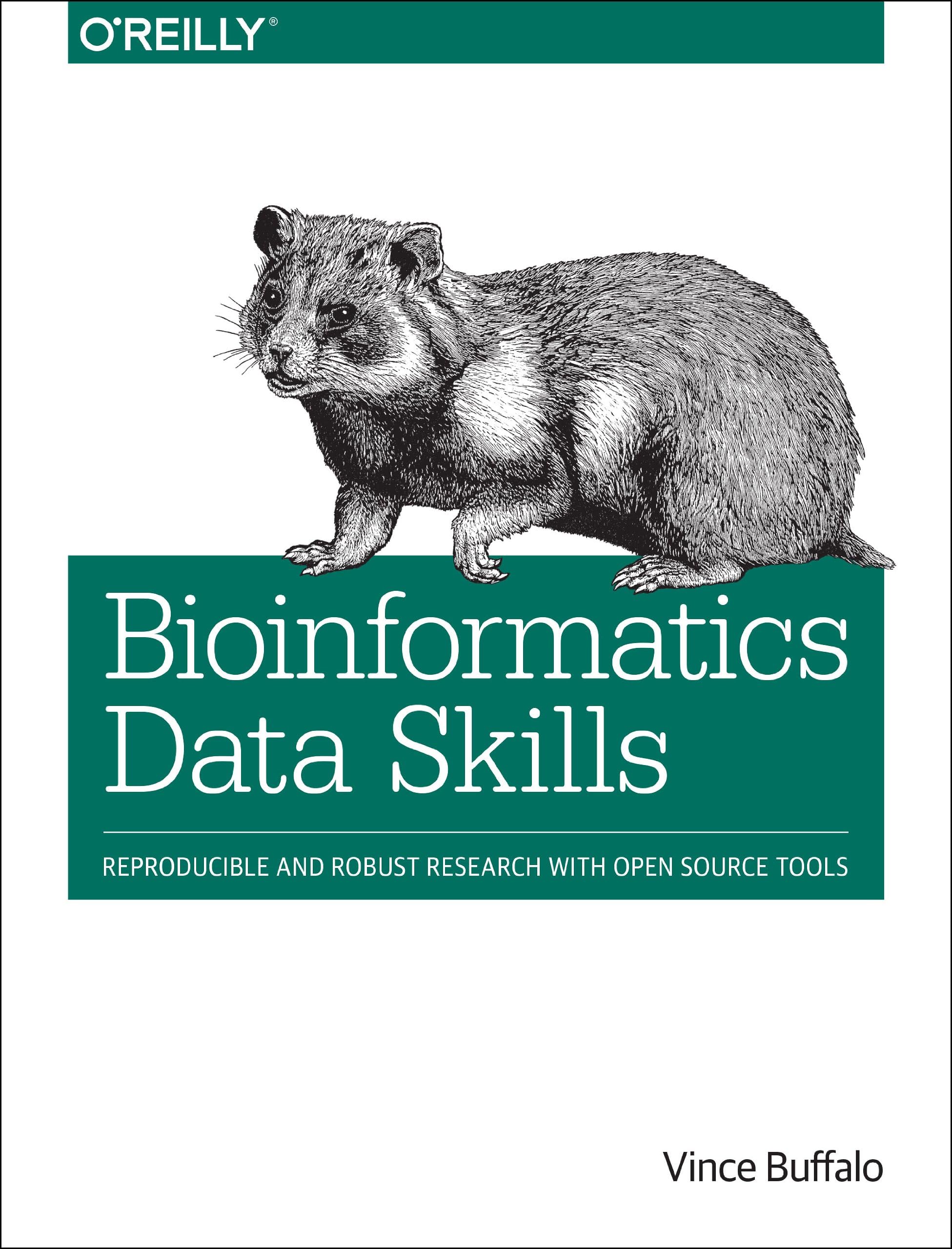

Bioinformatics Data Skills: Reproducible and Robust Research with Open Source Tools [Buffalo, Vince] on desertcart.com. *FREE* shipping on qualifying offers. Bioinformatics Data Skills: Reproducible and Robust Research with Open Source Tools Review: Covers mot (all) of the basic skills at the intermediate level - It's one of the most readable books in bioinformatics. It's concise and has a nice balance of range vs. depth. The author is very adept at leading the audience into a topic in a step-by-step fashion, probably due to his experience in interacting with people who want to get into bioinformatics but only have very limited knowledge of unix and programing. For instance, although he pointed out that SQL was beyond the scope of this book, he nonetheless introduced a series of sqlite operations that should suffice for most research projects except those aiming at providing complex database for large group. Highly recommended for scientists with background in biology but want to get into data analysis. Review: Great reference for beginning unix and remote machine skills for bioinformatics - I definitely recommend this book. I've started doing more bioinformatics at work. This chapters on unix tools and remote machines were directly applicable to the work I do, and they're mostly arranged in the order you would need them in. I also quite appreciate his editorializing on how to set up directory structures for more reproducible research. The negative I would say is that I've had trouble motivating myself to go through the middle third of the book ("Introduction to R" and "Range Data") chapters. While proper programmers can and do float easily among languages, and I strongly appreciate the Unix chapters, it feels like people fall more into R or Python camps, and while I could be wrong, I don't feel like I should really need to add R at this time.



| Best Sellers Rank | #930,203 in Books ( See Top 100 in Books ) #82 in Bioinformatics (Books) #1,016 in Software Development (Books) #5,026 in Computer Science (Books) |
| Customer Reviews | 4.6 4.6 out of 5 stars (136) |
| Dimensions | 7 x 1.25 x 9 inches |
| Edition | 1st |
| ISBN-10 | 1449367372 |
| ISBN-13 | 978-1449367374 |
| Item Weight | 2.05 pounds |
| Language | English |
| Print length | 536 pages |
| Publication date | August 18, 2015 |
| Publisher | O'Reilly Media |
L**U
Covers mot (all) of the basic skills at the intermediate level
It's one of the most readable books in bioinformatics. It's concise and has a nice balance of range vs. depth. The author is very adept at leading the audience into a topic in a step-by-step fashion, probably due to his experience in interacting with people who want to get into bioinformatics but only have very limited knowledge of unix and programing. For instance, although he pointed out that SQL was beyond the scope of this book, he nonetheless introduced a series of sqlite operations that should suffice for most research projects except those aiming at providing complex database for large group. Highly recommended for scientists with background in biology but want to get into data analysis.
D**H
Great reference for beginning unix and remote machine skills for bioinformatics
I definitely recommend this book. I've started doing more bioinformatics at work. This chapters on unix tools and remote machines were directly applicable to the work I do, and they're mostly arranged in the order you would need them in. I also quite appreciate his editorializing on how to set up directory structures for more reproducible research. The negative I would say is that I've had trouble motivating myself to go through the middle third of the book ("Introduction to R" and "Range Data") chapters. While proper programmers can and do float easily among languages, and I strongly appreciate the Unix chapters, it feels like people fall more into R or Python camps, and while I could be wrong, I don't feel like I should really need to add R at this time.
S**A
great book, not for beginners though
This book contains a lot of tidbits of info I wish I knew when I started learning bioinformatics. I wouldn't really say it's a cookbook that'll take you through your analysis step by step, nor is it for beginners; but it teaches practical knowledge and good data analysis and record keeping practices. It's a little densely written, and definitely not a primary resource, but a good reference nonetheless.
P**S
A must read for early bioinformaticians
Such a well written and easy to follow book for bioinformaticians with low-intermediate programming knowledge. I recommend this book to all of my mentees.
Y**U
A must-have in the field bioinformatics
The content of this book is very broad and seemingly unrelated to each other. It covers basic command line, git, R and some commonly used software such as samtools and bcftools. It also teaches important working concept of bioinfo, such as reproducible research.
K**N
A great book to start bioinformatics
It introduce all the skills needed to work on the state of art NGS data, and present the skills in a very readable way.
Z**S
Great book for learning NGS data analysis, not for true beginners.
I feel strongly obligated to commend this book. This is a wonderful compendium that helps those who already know a bit of Python/R languages to quickly pick up speed in dealing with next-gen sequencing data. Many of the practical tips are not easily available elsewhere. Some potential buyers may be distanced noticing the fact that the author is a new graduate student in population genetics. Please don't worry. The author is also a senior bioinformatician who is so generously sharing his truly practical insights and skills with NGS data. Fresh and up-to-date! On the other hand, it's only fair to note this book is not for those who are truly beginners to bioinformatics, especially those without any Linux/Python/R skills.
R**R
A carefully written intermediate text with valuable advice for all who work with large data sets in biology.
The book is a gem. The clear and unambiguous description of technical details sets it apart from many similar volumes. The author's wise advice on good practice could save many a researcher time and trouble in the long run.
E**A
I bought this book to get a feel for what exactly is bioinformatics as I aspire to get into this area (I have a science degree and am working as a Data Engineer following bootcamp training - to get computational skills and experience) an to my opinion it does give a decent reality check - it is about reproducibility, project folder structure, a lot of shell scripting, becoming familiar with Linux etc (you can tell I didn't get further than Chapter 4 yet!). Anyway, great read, super happy with the purchase!
O**S
Un livre fantastique, une vrai bible pour tous ceux qui souhaitent apprendre la philosophie des analyses bio-informatques. Je continue de lire et relire ce fabuleux livre !
A**S
Great for beginners, looking forward to have some spare time and go deeper. My biological background is taken into account and the explanation is easy to follow.
T**A
O conteúdo do livro em si é ótimo A grande questão é a entrega da Amazon que danificou bastante o produto
A**R
I think this book will be useful for those who are not familiar with Linux and basic programming. However, the book doesn't have that much info on Bioinformatics. 70% of the book is about Linux command line, git source control and very basic R. So if you are a comp sci or a programmer then chances that you know all this stuff are pretty high. The actual bioinformatics read starts at the end of the book. I was hoping to see at least some info on de novo assembly, sequence alignment, NGS data processing, Galaxy and BioPython. If you are a tech savvy then I recommend: Bioinformatics: A Practical Handbook Of Next Generation Sequencing And Its Applications This book has a good listing and a brief explanation of all necessary tools to conduct a full analysis.
Trustpilot
1 month ago
2 weeks ago