
DOWNLOAD THE APP


Customer Services
Copyright © 2025 Desertcart Holdings Limited
DOWNLOAD THE APP
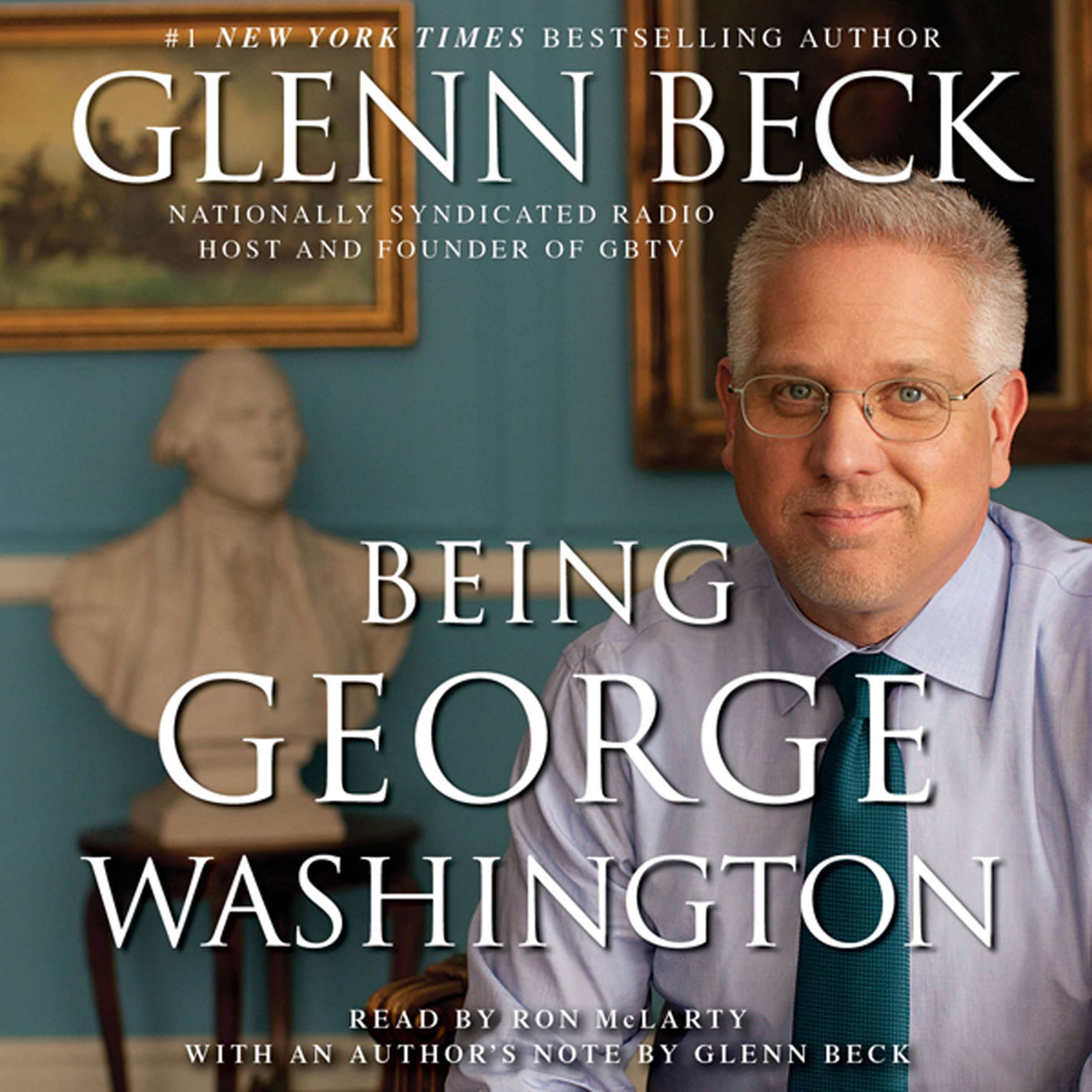
desertcart.com: Being George Washington: The Indispensable Man, As You've Never Seen Him (Audible Audio Edition): Ron McLarty, Glenn Beck, Simon & Schuster Audio: Books Review: Excellent, moving account of the greatest American - Unlike those who gave the 1-star reviews, I waited to write my assessment until after I actually read this book. I just finished last night. I didn't have high expectations. I admire Glenn Beck and have always felt that George Washington was one of the great men of history. But I didn't really think that I would get too much from a popular history written by a media figure. I was wrong. This is a superb book. It is not a conventional history with myriad chronological dates and events, detailing every known item in Washington's career. Rather it is a series of vignettes of some of the highlights of Washington's remarkable life. These little stories give us a more personal view of what Washington experienced, showing us the formation of his character. But more importantly, they show us how the character of this one man affected the history of this country and, ultimately, of the world. Each little episode is quite compelling. They start with Washington's first experience as a soldier in the French and Indian War. Then onto the Battle of Trenton. Then Valley Forge. Next to the culminating great battle of the Revolutionary War: The Battle of Yorktown. Finally to Washington's political life as President. And then to a brief view of Washington's death. But the common thread in all of these stories is how Washington was able to face dire situations and overcome them due of his strong sense of honor, his rectitude, his belief in a supreme guiding force to the universe. The book is very well-written and obviously thoroughly researched. I didn't find any historical inaccuracies nor any typos -- a rarity these days. I found myself quite moved by several of the passages, especially when Washington was able to quell the incipient Newburgh mutiny by appearing before his officers, trying to read a letter to them, failing, and then needing to resort to his glasses to finish the letter: "Gentlemen, you will permit me to put on my spectacles. For I have not only grown gray but almost blind in service to my country." Washington was so much respected in his day that he was offered the kingly crown of the new United States. He refused. This is a man much to be admired, from whom we have all have a lot to learn. Well done, Glenn Beck. You have re-awakened my interest in the greatest American who ever lived, and done it in a compelling fashion. Review: A Call To Lead in the Ilk of Our First President - I was encouraged to read this book because of the gaping hole in leadership internationally, nationally, and locally - whether in politics, education, business, or in the church. Simultaneous with my reading of this book I was interested in something that John Gardner (in an essay on leadership) pointed out, "When the United States was formed, the population stood at around 3 million. That 3 million produced at least six leaders of world class--Washington, Adams, Jefferson, Franklin, Madison, and Hamilton." Today we have a population 90 times larger than that and I can't name a single leader that comes close to the aforementioned six men. Along with Gardner I ask the question "Where are they?" Therefore, my curiosity was piqued in reading this book to discover what we can learn from Washington's life - and whether we can truly produce great leaders today. One of the main points that Beck makes in the book early on is that "for America to achieve the greatness that George Washington achieved, we have to remember that it is achievable." In story after story Beck brings out some of the keys to great leadership - character (based on a strong faith in God and His good providence); putting others before self - especially what's best for the whole; having a vision for liberty and fighting for it; focusing on that which will last beyond us. In a nutshell Beck highlights Washington's character, trust, and honor in story after story and demonstrates how he united America around freedom so that we could be the best we could be. The primary lesson of this book and of great leadership is stated by Beck in this manner, "Everything we do in life--every battle that we fight and every mountain that we climb, no matter how many times we fall--may be for no other purpose than to prepare us for that moment when we are called upon to make a difference in this world...What Washington did do was accept the responsibility he had been given, beg the grace of God upon himself and his army, and then work relentlessly to accomplish his goals. What he did do was to keep on working, regardless of the personal sacrifices required or the setbacks that he encountered. He kept the faith, no matter who stood against him; regardless of the gossip, the naysayers and sometimes, regardless even of the betrayal of his friends." In conclusion Beck states that if you and I are to be like George Washington in today's world means: "a daily struggle between your heart and your brain; between instant gratification and enduring greatness." "looking out for our families, our neighbors, and our countrymen--standing for them when they can't stand for themselves." "putting country before party." "becoming a leader - not of a country or army, but of yourself, your community, and your own family. It means taking personal responsibility for your actions and holding those around you to the same standard." "accepting that this country was chosen for Divine protection because the struggle for freedom is worthy of protection." In other words, great leadership involves humility before God; responsibility with what He has stewarded unto us, and faithfulness to the task at hand. This book was a pleasure to read, and pointed out both the strengths and weaknesses of Washington. However, the constant reminder was to be what we can be with God's help, and do what we can do (not focus on what we can't do), one step or opportunity at a time. Being a great leader like Washington involves great sacrifice, risk, unselfishness, and tremendous dedication. In the final analysis we need to be willing to personally answer the key question that Beck asks, "Are you willing to lose everything to do what is right?" I am grateful that Washington did, hope I will too, and that his tribe will increase abundantly.
S**S
Excellent, moving account of the greatest American
Unlike those who gave the 1-star reviews, I waited to write my assessment until after I actually read this book. I just finished last night. I didn't have high expectations. I admire Glenn Beck and have always felt that George Washington was one of the great men of history. But I didn't really think that I would get too much from a popular history written by a media figure. I was wrong. This is a superb book. It is not a conventional history with myriad chronological dates and events, detailing every known item in Washington's career. Rather it is a series of vignettes of some of the highlights of Washington's remarkable life. These little stories give us a more personal view of what Washington experienced, showing us the formation of his character. But more importantly, they show us how the character of this one man affected the history of this country and, ultimately, of the world. Each little episode is quite compelling. They start with Washington's first experience as a soldier in the French and Indian War. Then onto the Battle of Trenton. Then Valley Forge. Next to the culminating great battle of the Revolutionary War: The Battle of Yorktown. Finally to Washington's political life as President. And then to a brief view of Washington's death. But the common thread in all of these stories is how Washington was able to face dire situations and overcome them due of his strong sense of honor, his rectitude, his belief in a supreme guiding force to the universe. The book is very well-written and obviously thoroughly researched. I didn't find any historical inaccuracies nor any typos -- a rarity these days. I found myself quite moved by several of the passages, especially when Washington was able to quell the incipient Newburgh mutiny by appearing before his officers, trying to read a letter to them, failing, and then needing to resort to his glasses to finish the letter: "Gentlemen, you will permit me to put on my spectacles. For I have not only grown gray but almost blind in service to my country." Washington was so much respected in his day that he was offered the kingly crown of the new United States. He refused. This is a man much to be admired, from whom we have all have a lot to learn. Well done, Glenn Beck. You have re-awakened my interest in the greatest American who ever lived, and done it in a compelling fashion.
D**G
A Call To Lead in the Ilk of Our First President
I was encouraged to read this book because of the gaping hole in leadership internationally, nationally, and locally - whether in politics, education, business, or in the church. Simultaneous with my reading of this book I was interested in something that John Gardner (in an essay on leadership) pointed out, "When the United States was formed, the population stood at around 3 million. That 3 million produced at least six leaders of world class--Washington, Adams, Jefferson, Franklin, Madison, and Hamilton." Today we have a population 90 times larger than that and I can't name a single leader that comes close to the aforementioned six men. Along with Gardner I ask the question "Where are they?" Therefore, my curiosity was piqued in reading this book to discover what we can learn from Washington's life - and whether we can truly produce great leaders today. One of the main points that Beck makes in the book early on is that "for America to achieve the greatness that George Washington achieved, we have to remember that it is achievable." In story after story Beck brings out some of the keys to great leadership - character (based on a strong faith in God and His good providence); putting others before self - especially what's best for the whole; having a vision for liberty and fighting for it; focusing on that which will last beyond us. In a nutshell Beck highlights Washington's character, trust, and honor in story after story and demonstrates how he united America around freedom so that we could be the best we could be. The primary lesson of this book and of great leadership is stated by Beck in this manner, "Everything we do in life--every battle that we fight and every mountain that we climb, no matter how many times we fall--may be for no other purpose than to prepare us for that moment when we are called upon to make a difference in this world...What Washington did do was accept the responsibility he had been given, beg the grace of God upon himself and his army, and then work relentlessly to accomplish his goals. What he did do was to keep on working, regardless of the personal sacrifices required or the setbacks that he encountered. He kept the faith, no matter who stood against him; regardless of the gossip, the naysayers and sometimes, regardless even of the betrayal of his friends." In conclusion Beck states that if you and I are to be like George Washington in today's world means: "a daily struggle between your heart and your brain; between instant gratification and enduring greatness." "looking out for our families, our neighbors, and our countrymen--standing for them when they can't stand for themselves." "putting country before party." "becoming a leader - not of a country or army, but of yourself, your community, and your own family. It means taking personal responsibility for your actions and holding those around you to the same standard." "accepting that this country was chosen for Divine protection because the struggle for freedom is worthy of protection." In other words, great leadership involves humility before God; responsibility with what He has stewarded unto us, and faithfulness to the task at hand. This book was a pleasure to read, and pointed out both the strengths and weaknesses of Washington. However, the constant reminder was to be what we can be with God's help, and do what we can do (not focus on what we can't do), one step or opportunity at a time. Being a great leader like Washington involves great sacrifice, risk, unselfishness, and tremendous dedication. In the final analysis we need to be willing to personally answer the key question that Beck asks, "Are you willing to lose everything to do what is right?" I am grateful that Washington did, hope I will too, and that his tribe will increase abundantly.
J**S
Historical. Factual. Fascinating. Inspirational.
BEING GEORGE WASHINGTON by Glenn Back is a remarkable book filled with historical insights, observations and inspirational anecdotes about one of America's greatest leaders: George Washington. Unlike today's professional politicians, Washington did not aspire to celebrity, status, power, influence or riches. He was a humble man with a modest opinion of himself. In fact, his heart was always toward home. He was pressed into service at the insistence of a desperate country as its military general, President and Father. Through it all, his meekness, courage and Christian values (selflessness, love of others, reverence toward God) marked him as a man marked for greatness. Through his life, Divine Providence intervened supernaturally, protecting him from being killed several times during the French and Indian war and the Revolutionary War. The measure of the man, loved and revered by his men, was never on fuller display than in quelling the rebellion by army officers against Congress after the war. In a fascinating story of tremendous significance, Beck recounts the fateful day when Washington stood alone against his Army and his Congress. Only a man of his integrity, leadership and character could have carried that day. Beck challenges the reader to aspire to meekness, to strive to attain lowliness, to pursue a life of unselfish service to others and, in that pursuit, change our lives, our communities and our country. It is unquestionably a high calling. The same which was upon George Washington's life. It is the call to public service. Is there another Washington in our midst?
P**S
Glenn Beck is a passionate man. Famous (or infamous - depending one's point of view) for expressing every thought in his head (regardless of the consequences for himself) and expressing his opinions with total passion. Not a person who is known for obeying the polite dinner party rule of "avoid the subjects of politics and religion". And not someone to put personal character in a different box from political opinions or to avoid making public his judgements about people - whether it is Barack Obama, Newt Gingrich or HIMSELF (Beck, although his critics seem not to know, can be at least as harsh in his judgements of himself as he can be about other people). So how does the above effect this book? Oddly enough it effects if for the GOOD. Glenn Beck writes passionately but accurately (although his grasp of the details may owe much to the group of researchers who are listed as helping with the book), and the passionate style of Beck helps the reader understand Washington - a man who, because of his deep (very old style ENGLISH, I hope American readers will not be offended by the use of that word - but George Washington is, to some externt, like an English Gentleman of the "old school") reserve - is very hard to get close to. What Beck does is take the stiff formal statute of George Washington - and show us the man inside it. His motivations, his principles - what he really cared about. The left believe this book has an "agenda" and they are correct - although not quite in the way they think they are correct. Glenn Beck does indeed have both political and religious objectives - this is hardly a secret, he says so every day. However, this book is really more about MORAL objectives. Beck (to use a word that he often uses about himself) was a "scumbag" for most of his life - he has tried to become a different sort of person (although he still remains very harsh in his judgements about himself), and in George Washington Beck has found a subject who tried (all his life - not just in the latter part of it as Beck has done) to live up to some very hard moral rules - and whose whole existance was centered on trying to be as good and right as he could be, every day. "How can a slave owner be engaged in a daily effort to be a honourable as possible?" "How can a soldier (i.e. a killer - for being a soldier is about being a killer) be good?" Actually the effort is possible - and the effort was made. For example, George Washington's slaves did not just admire him because he freed them in his will - as hard as it may be for people to understand today, they admired him whilst he was alive also. Beck's real "agenda" is to lead people (including himself) to follow George Washington's example in making this moral effort. Many others have written such attempts before (although less in the modern age). For example, the work of the Roman Emperor Marcus Aurelius - whose "Meditations", although they touch on political questions, are really about moral character (and a rather passionate moral character for those who think that "Stoic" means what most modern people seem to think it means). However, George Washington (like most of the "Founding Fathers") believed that the COMMON MAN was capable of this degree of virture (so formally did Marcus Aurelius - but in practical terms he did not act as if he believed it). Indeed the Founders (including Washington) believed that the Republic they were building would collapse without this sense of honour in the citizens. Glenn Beck clearly believes the same thing - and sees the essential project (far more important than any political project) as each person restoring themselves. Making themselves the honourable people they were meant to be - only then can there be any hope for the Republic. An absurd dream? Or the only practical course of action - restoring the foundation of honest citizens withougt which a Republic is bound to collapse into "bread and games"? I do not know. But I do know this book is well worth reading.
P**"
It matters not how long a man lives, but, what he does while he is alive. Surely this says it all about the man called George Washington.
Trustpilot
1 month ago
3 weeks ago