
DOWNLOAD THE APP


Customer Services
Copyright © 2025 Desertcart Holdings Limited
DOWNLOAD THE APP
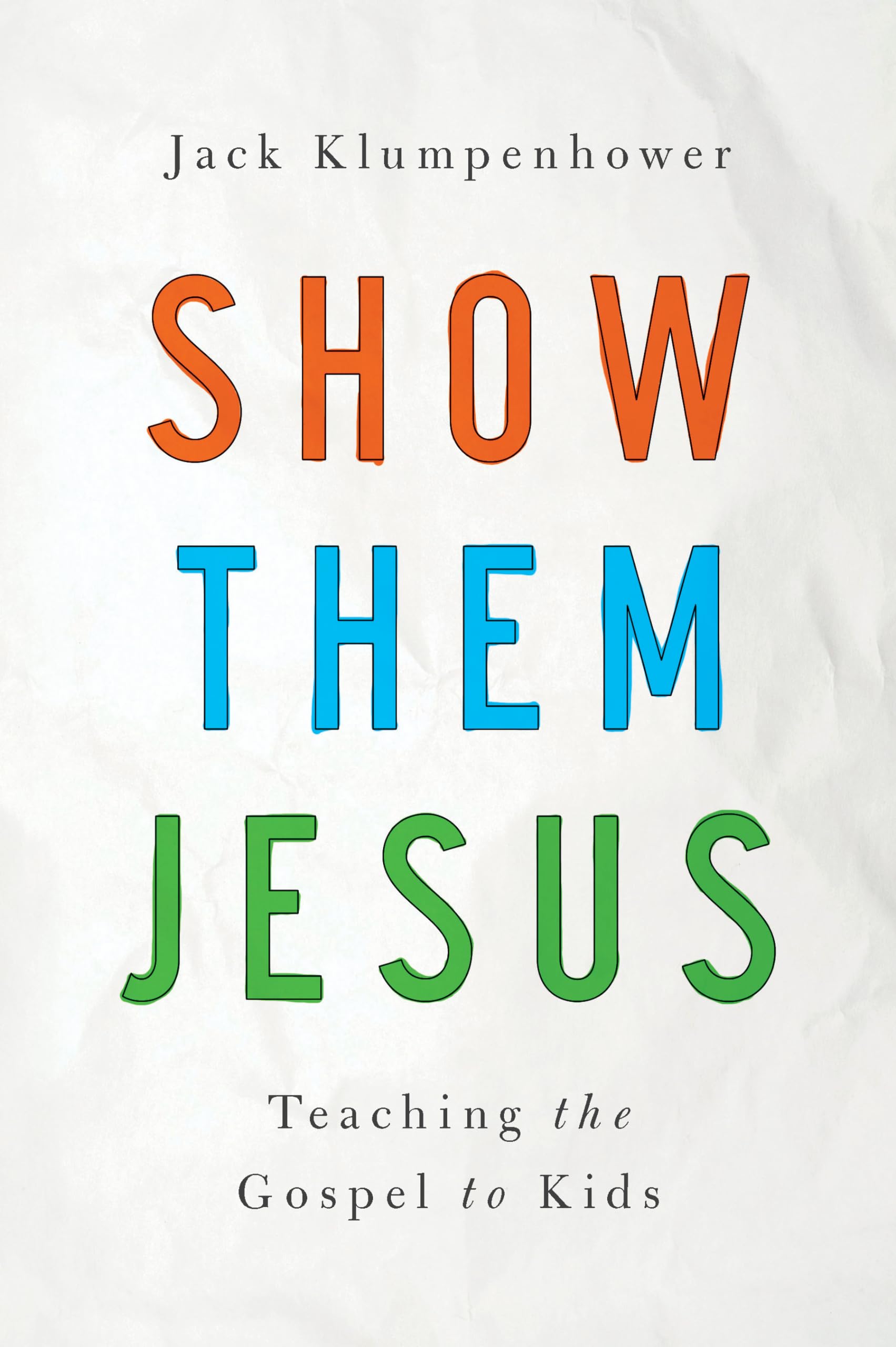
Show Them Jesus: Teaching the Gospel to Kids
S**D
"Moral reform is not the same as Christian growth."
A while back, a ministry acquaintance of mine decided to impart a little "wisdom" to this children's pastor. His advice? Well, in the context of discussing preaching and teaching, he said: "Kids just need to be told what to do." Explaining, he adding "Obeying parents, reading Bible, that kind of thing." Within context, he was heavily implying that they don't need theology, or the teaching about why we do what we do. Instead, he was settling for simple moralism. As an amusing contrast, I had begun reading Show Them Jesus only shortly before that.Whatever good intentions may have lain in his heart, that acquaintance sadly failed to remember the axiom "Rules, without relationship, breeds rebellion." Show Them Jesus takes the Biblical philosophy that showing children Jesus, and helping them know him, allows morals and behavior to flow naturally from that relationship. Rules that children will want to follow themselves, rather than complain about and find every chance to break or bend, which is inevitable with simple moralism.The book is divided into two sections. The first is "Why Teach The Good News" and the second "How to Teach the Good News." Each chapter within those sections has a title, a subtitle, and a relevant quote. For example Chapter 4 has "The Factory-Preset Fourth Grader" with the subtitle "Because the good news changes hard hearts." While the titles are usually inventive and fun, they are also insightful enough to specifically address the problem and solution offered in that chapter.The basic premise of the book is summed up in a statement made early on. "Rather than coax the kids into temporarily acting better, Joe [a fellow teacher at the author's church] told about Jesus and trusted God to use that message to make the kids become better." The author, upon discovering this, tried it, tested it, and found it to be so true that he wanted to share it with the world. Hence, the book.In the aforementioned Chapter 4, one of my favorite chapters, the author begins with an all too familiar situation. He had just finished teaching on greed, specifically, not being greedy. Next up was snack time, and the class promptly began fighting over who got more cookies. Noting that simply moral teaching just wasn't cutting it, as studies show, and lives display. Taking the time to dissect each of the good reasons we try to motivate good behavior, he finds each lacking when compared with a genuine fascination and love for God.Part 1 absolutely shines in the approachable language, relatable stories, and Biblical evidence. His philosophy is, like the Bible, simple, yet profound. It strips away tradition to reveal the hollow human efforts behind it and instead purposes the solid and soul-transforming power of the Good News of the Gospel. At this point, I was begging to know how to best address this in my own preaching, and eagerly leaped into Part 2.Beginning in chapter 6, the author begins on a slightly wobbly note. He admits he has never been to college, nor received formal training with teaching or biblical interpretation. Sadly, this shows. Chapter 6 covers showing Jesus from the Old Testament, and is populated by as many mountain peaks of beauty as it is valleys of misunderstandings.One of the peaks is his looking at each passage in light of how man has failed (or will fail) through sin, and how God responds to that. This is formally known as Bryan Chappell's "Fallen Condition Focus." (1) Using this, the author rides this principle, not to the modern day, but first, to how Jesus either solved the problem, or offered a better solution than the one in the OT. He does this with one of three questions: "Who God is," "What God does," and "Jesus Solves Problems," This is actually a pretty interesting approach, and one that many teachers would benefit greatly from. He lays incredible emphasis on getting past the human players and looking to God for the lesson to be learned. He even recommends ditching pre-made lessons to try out this "good news" focused approach, an idea I (after reading far too many moralistic and simplistic and topical) I heartily agree with.Later, however, the author writes that each passage can have several themes and main ideas. While that's true to a point, concepts like the "Hermetical Idea" and/or "Exegetical Idea" rely on the fact that passages contain one big idea, and additional elements explain or apply it. He also offers the idea that some OT passages are wrought with a "tension" and incompleteness until Jesus is applied. While this sounds nice, it also means saying that God's Word was incapable of conveying the truth he wanted until thousands of years after it was written. What then of the original, biblical author's intent to his original audience? Sometimes, it seems, in the eagerness to find Jesus, Show Them Jesus misses that God is also, well, God. Using the author's own approach to find how God loved sinners would show how God continued to love them in that way in Jesus, rather than heavily hint that there are/were problems with the Bible and it's stories until 33 AD. Thankfully, the remaining chapters, stepping into Christ's time, then into modern application, obviously don't suffer as much from interpretive issues.Chapter 8 is heavy on practical application of this, not only in teaching, but in other classroom policies. It breaks down class rewards, discipline, corporate worship, and even how to handle misbehavior in light of the "good news" model. It's an incredibly hard-hitting chapter that needs to be read and re-read.The final chapter ends with a reminder to stay the course, even when it doesn't seem to be working, or life is frustrating, or even you yourself struggle with this "good news" focus. Christ is there, he loves you, and he will aid you. The conclusion, featuring a sermon excerpt of Spurgeon's, as his Gospel-centered message inspired D. L. Moody to speak far more often of Christ in his own preaching. This hearkens back to the opening of the book, as there, another teacher inspired the author on his own journey. The book closes by challenging the readers to inspire those around them as they too teach Christ.At it's brightest, Show Them Jesus is a brilliant beacon of hope that has the power to turn the stagnant and ineffective moralism upside down and inside out by reminding Christians of the power of God's good news in Christ. Like a surgical knife, it cuts away at false motivations and selfish desires to do right, and makes way for the Bible's truth to penetrate our hearts. He offers the problem, he offers a solution, and now it's our turn to step up to the plate and follow his lead in showing others Jesus.Notable Quotables:Chapter 1: Because Jesus is All We Need - "The good news means you relate to God based on what Jesus has done for you, not what you’ve done to prove yourself worthy."Chapter 4: The Factory-Preset Fourth Grader - "None of us learns to love anyone—including God—by having someone tell us to love them. You love people because you find them beautiful and lovable, and because they love you. The good thing is that God is far, far more beautiful and love-worthy than anything or anyone else, and he loves us far, far more than anyone else ever could."Chapter 8: The Grapes That Taught Good News - "The kids’ attitudes also confirmed what my gut felt when I first heard about the [Bible] bucks: a classroom culture built on rewards for performance wouldn’t fit the good news I planned to teach. It wouldn’t do to teach that God’s rewards in salvation come freely, by grace, but that rewards in the church come by being good and memorizing verses."Chapter 9: The War on Sin - "Moral reform is not the same as Christian growth."8/10
P**Y
Must read for all those who work in christian ministry with kids
This book is an excellent reminder and helpful tool for realigning our purpose as christian educators. I think it's a must read.
C**E
Great children's ministry resource for teachers.
I bought copies for all my kids church teachers and they all love it.
W**S
Life-Changing; full of truth of how the grace in the Gospel (not mere morality preaching) transforms us
This is a life-changing book that put into words so many things that have nagged at the back of my mind about the way we teach the Bible to children. It seems far too many picture Bibles, Sunday school curricula, and parenting books boil the Bible down to "This Bible character did this. You should do/not do this." You could completely remove God and Christ from some of these books/methods and the application would not change: be good. Likewise, as a parent it's too easy to simply use Bible stories as a way to try to manipulate our kids' behavior.To begin with, trying to "be good" without understanding our new life in Christ and the Holy Spirit's enablement is completely futile. This focus on morality apart from the Gospel also helps explain why many church kids grow up and leave the church. If all church gave them was a list of how to behave, but they never truly fell in love with Jesus and understand all he did for them, why stay in church?Klumpenhower maintains that "The cross of Jesus—not principles of good living—is the engine of the Christian life." The gist of this book is that more than anything, kids need to be shown God's character, Jesus' work, and the Holy Spirit's enabling. This, more than any moral lesson, will be what transforms them. "We make a mistake if we think kids are saved by hearing the good news and trusting Jesus, but then grow as Christians some other way." While the Bible does give useful examples, if kids "get Samuel the good listener without first appreciating God the Great Speaker, they're liable to end up relating to God only in an anxious, what-I-must-do way."Klumpenhower gives practical advice for how to teach the Word in a way that points to Jesus and not our own efforts. For example, when teaching Old Testament stories he recommends asking:"1) What is God doing for his people in this story? 2) Good News! How does God do the same for us—only better—in Jesus? 3) Believe it! How does believing this good news change how we live?"Here is an example from teaching about Moses:"What is God doing for his people in this story? He arranges events to protect baby Moses and give the Israelites a leader who will rescue them from Egypt. Good News! How does God do the same for us—only better—in Jesus? He has provided a Leader and Savior who rescues us from sin and death. Believe it! How does believing this good news change how we live? Even when it's hard to see, we can trust that God is working out his plan to complete our salvation."Another great example is how he recommends addressing sin: the surface sin we can see (example: dancing to lewd music), the selfish fear underneath (ex: afraid friends won't like or accept me), and the root unbelief (ex: not believing Jesus gives me God's approval).I'm just scratching the surface of this book. Chapter after chapter is filled with wonderful truth about how the grace given in the Gospel impacts every area of our lives and about how our identity in Christ is what transforms us. I recommend it to anyone who wants to use the Bible as their foundation for living, teaching, and parenting. It's that good. Go read it! If you're intrigued but not sure you can read the whole thing, download the free Kindle sample and at least read the introduction and first chapter; it will give you a good overview. And then you'll probably want to read the rest!
A**R
This book is a must-read for anyone who ministers to children.
This book challenges those who minister to children to evaluate the way that they teach the Bible to children. The purpose of Biblical accounts are not simply to pound good morality into children's head, but to touch their hearts with the truth of the gospel. Every account points to Christ in some way. Children saved and unsaved need to hear the truth about sin, eternal destiny, and the Savior.
K**
Must read!
A must read for all Pastors. This should be in your toolbox of books that you read and apply daily.
A**R
Great resource
This is such a great book! I recommend it for anyone working with kids or has kids. So many applicable, practical examples that make teaching the gospel to kids feasible. I also really enjoy how this book points you to Christ and just leaves you wanting to share that with everyone around you kids or anyone else for that matter.
M**.
Must buy
Unreal book - bought many for those around me and they bought them for others as well.
D**N
Five Stars
It's a really good book for teaching the gospel to children.
W**7
Grace, grace, grace...
Amazing! Made me rethink lots of the things I do as a teacher. Grace all the way!
Trustpilot
1 week ago
3 days ago