Some deliveries may take a little longer than usual due to regional shipping conditions.
DOWNLOAD THE APP


Customer Services
Copyright © 2025 Desertcart Holdings Limited
DOWNLOAD THE APP

💤 Monitor your nights, own your days — never miss a breath of insight!
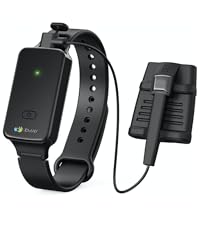
The EMAY Sleep Oxygen Monitor is a lightweight, user-friendly device designed for continuous overnight tracking of blood oxygen saturation and pulse rate. With 40 hours of built-in memory, it records data independently of your phone, syncing later via a free app that provides detailed sleep reports and raw data exports. Featuring a large rotating LCD display for easy viewing, this monitor is ideal for sports and aviation enthusiasts seeking proactive health insights, though it is not intended for medical diagnosis.




| ASIN | B07RKVDHXH |
| Are batteries included? | Yes |
| Battery Life | 40 Hours |
| Best Sellers Rank | #3,800 in Sports & Outdoors ( See Top 100 in Sports & Outdoors ) #9 in Heart Rate Monitors (Sports & Outdoors) #24 in Electronics & Gadgets |
| Brand | EMAY |
| Brand Name | EMAY |
| Color | Grey |
| Customer Reviews | 4.3 out of 5 stars 3,091 Reviews |
| Included Components | Device |
| Item Weight | 0.01 Kilograms |
| Manufacturer | EMAY |
| Measuring Range | SpO2: 35-100%, Pulse Rate: 30-250 bpm |
| Model Name | EMO-80 |
| Number of Batteries | 2 AAA batteries required. (included) |
| UPC | 797550113181 |
| Unit Count | 1.00 Count |
T**S
Emay Sleep Oxygen Monitor
The Emay oxygen monitor works great. It stays on your finger at night and had no lapse of data. The app was extremely easy to setup and use. The reports it generates are detailed and easy to read.
S**.
A literal life saver!
For months I was waking up with massive migraines, feelings like I hadn't slept in weeks, fatigued and brain fog constantly. I'd talked with my doctor about setting up a sleep study but they were backlogged. Every day I felt progressively worse and worse. Then I though "I'll just do my own sleep study, see if I really do have apnea going on". I ordered this device and was absolutely shocked at what I saw. I knew it wasn't good, but not this scary! I was dipping clear down to 68% oxygen saturation (65% is where your lips and fingers turn blue). I showed my Mom this first graph and she just happened to have an extra CPAP machine stored away. She got me setup and the first night was incredible! I felt like a new human! (2nd graph). This all went down 2 months before my actual sleep study which confirmed, yep, I have a pretty good case of sleep apnea. I feel like without this tool, I genuinely wouldn't have survived! As for the device itself, it works pretty flawlessly! It's comfortable, stays on well through the night and uploads the data to the app with ease. Part of my nightly routine now! Only thing that's kind of a bummer is how quick it runs through AAA batteries (a set every 8 days or so). I picked up some rechargeable batteries, which I'd highly recommend. Beyond that, solid device, well worth the price! If you suspect sleep apnea (you snore, you wake up fatigued, you have brain fog, mornings are way more rough than they used to), BUY THIS!
T**S
Easy to use & accurate way to assess reduced blood oxygen levels and their severity
The EMO-80 is an incredibly well-designed, accurate (I compared it to several other oximeters including my doctor's and my Apple watch), and useful product. The graphic displays and summary reports are easily accessible in the app, and they present, in a very user-friendly and professional way, all the information that is needed to assess reduced blood oxygen levels, to identify sleep apnea and its severity, and to check the effectiveness of sleep apnea remediation devices. The battery life is quite good. Using alkaline batteries, I get 6 nights of all night recording which is a couple of nights more than I expected with all night use. A minor positive point is that the device comes with, not one but two, sets of batteries and they are alkaline batteries. I don't know if you've noticed, but anything I have ever bought that comes with batteries always come with shorter-lasting non-alkaline batteries.
T**E
Even with one short coming, I am very impressed.
Update 5/1/20: Adjusting my rating to 4 stars after more use. This device has been incredibly helpful in tracking improvements or declines in O2 sats through the night. My research into Covid 19 has revealed possible mechanisms for the oxygen starvation that occurs in Covid 19. This O2 starvation seems to mimic that found with high altitude sickness. This led me to focus on certain supplements, one of which I was already using and have a good deal of experience with as a NAD+ repleter. As a result of my findings, I decided to add a new supplement. This one was created to help increase O2 sats in higher altitudes (wish I had known there was such a thing on a recent trip to Santa Fe). I was already running in the low 90's during the day, sometimes dipping into the 80's, and didn't have a real clue what was happening at night. I used this device to establish a good night time baseline, then added the new supplement - AltitudeRX. I have been able to track a steady increase in my O2 sats at night with this monitor, both in the gradually inceasing amount of time staying over the SpO2 threshold and in the detail the actual graphing provides. I am very impressed with this device, the app and the data it gives me. I highly recommend it. The only reason this is not receiving a 5 star rating is because of a short coming in the design of this device. Unlike a regular pulse oximeter, this one only functions if memory is available. This pulse oximeter has a 40 hour memory, and once it is full, you can no longer use it in any capacity until you empty the memory. However, to empty the memory, you must use the app. If you don't have a device with the app available, and you run out of memory, this little guy doesn't do anything. It doesn't even continue letting you see real time readings even though it can't record. I can't see a good reason for crippling its most basic functionality like that. It seems to me it should be a very simple thing to allow it to continue displaying measurements even though they can't be recorded. There also could be built into this the ability to overwrite the oldest data if someone is unable to download in time. IMHO a device like this should always be able to operate as a simple, basic pulse oximeter regardless of memory constraints. This should be a pulse oximeter first and always, and a recording device second. Original review: I have only used this for a few days/nights and would normally give this more time before writing a review, but I have to say, as a retired RN with critical care background, I am thoroughly impressed. This device is easy to use, has a nice, easy to read display, and is generally comfortable to wear. Besides the first pairing taking a few attempts, the only issues I have run into so far have been: 1) the first night when I used it on my index finger, my finger rolled enough to where it could no longer pick up a reading after a couple hours, and 2) when I tried it on my thumb, after an hour it was putting my thumb to sleep. I then tried it on my middle finger and had no issues. It recorded my pulse and SpO2 throughout the night without any difficulty. The app is intuitive, streamlined, east to use and quickly connects to my oximeter and downloads the data. The graph is easy to access and read; and creating a pdf of a report complete with graph and stats is simply done with a click of an icon at the top of the report. I have used other medical devices for BP and EKG monitoring which connect their respective devices to my phone, and I have to say this has been, by far, the easiest to use.
G**E
Works great for detecting sleep apnea
This is a solid product. Easy to setup and use, easy to wear at night sleeping, connects easily with the app, app software quality is excellent, prints a very detailed report. Without a CPAP, I was able to clearly see a lot of breathing issues at night, frequent oxygen desaturation events with associated rise in heart rate. Then when wearing a CPAP machine, it clearly showed a dramatic decrease in oxygen desaturation events. Pros: - Easy setup - Low cost compared to all others - Easy to wear at night - Excellent (android) app software - Easy to connect via bluetooth - Detailed report, downloadable in PDF or image - Clearly identifies apnea oxygen desaturation events - very few dropouts due to motion artifact (restlessness) - No monthly fee, it just works Cons: - Not rechargeable, uses common inexpensive AAA batteries - Somewhat bulky to wear compared to some others, but stays on the finger well, does not fall off
A**N
Should it be looser-fitting for bedtime? Yes, but with a little retro-fitting, it works fine...
What other reviewers said is true - it fits tight, and is definitely annoying when you go to bed. I felt like my pinkie was in a clamshell and the clam didn't want to let go. Very uncomfortable. BUT, read on... About the Retrofit: Looking for a solution, I rolled up two very small bandaids into little "bandaid cigars" and inserted one on each side of my inserted finger (alongside my finger) which provided a slight (very slight) "opening" of the clamshell to support my finger. When I did this, it worked well for comfort, I did not feel like my finger was squeezed an a clamshell all night long, and the device still recorded my data even with the retrofit keeping it just a tiny bit less tight. The key here is to insert a little extra padding on the white edge where the "clam" closes -- vs. a lot of bulk -- just a hint of extra padding so your finger isn't squeezed so tightly. If you opt to ry this, just make sure it's still recording data (look for the blinking light). If it's not, you've payed it open too far and it's not picking up a reading. About Keeping it on all night: It fell off once during each of the 2 nights I used it (I reconnected it when I woke during the night - then it continued recording data). So far I have not used the velcro strap designed to help keep it on - haven't found that necessary - I don't move that much during sleep. Finger choice: My physician friends told me any finger works for reading your data, so the choice is yours. I put it on my left pinkie since I'm right-handed and it's convenient to have a hand free during the night. Connecting & Reporting to the App: Setting up the app was super easy. Not entirely sure how to make sense of the report it spits out into the App, but the data looks clean and the graphics are pretty simple, so I'm sure I'll figure that out. Batteries: It's an energy eater - you need to replace the batteries (2 AAA) every 3 nights or so. I use rechargeable, so it's no biggie. Rechargeable batteries and chargers have come down a lot in price the past decade or so, so it's the way to go. Rechargeable batteries require special recycling, so don't throw them in the regular trash give them to your local recycling center. So far, happy with the purchase. It's nice to have a pulse ox that records data.
F**D
The ELMAY 80 Pulse Oximeter works as advertised!
As a patient with a history of Sleep Apnea the EMAY 80 Pulse Oximeter is perfect for tracking my O2 saturation while I am using my CPAP machine and allows me to make adjustments of the CPAP pressures. The device is easy to set up and use and the phone app really works as advertised. And the reports generated by the phone application are perfect for summarizing what is going on with your sats at night. The only mistake I made was to not synch the monitor with my phone when I first changed the batteries to reset the correct time in the device before using it again for the next night. Yes, I would buy it again and I will tell my friends on CPAP about this.
M**K
Good but....
Everything works great. Set up was easy. Got great telemetry from the device. Cons spring tension on finger is tight. It was uncomfortable and made it just a bit harder to fall asleep and stay asleep. Battery life isn't great mostly because it has to stay on and has to be manually turned off to record all night long. It was worth the money but need a mod to make it more comfortable.
Trustpilot
2 months ago
3 weeks ago