Buy anything from 5,000+ international stores. One checkout price. No surprise fees. Join 2M+ shoppers on Desertcart.
Desertcart purchases this item on your behalf and handles shipping, customs, and support to Sri Lanka.
⚡ Upgrade your ride with precision sensing — don’t let your engine miss a beat!
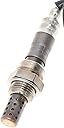
The Denso 234-4209 universal oxygen sensor delivers OE-level quality with a precision fit for a wide range of vehicles. Featuring an aluminum oxide trap to protect against contamination, stainless steel housing, and a porous Teflon filter, it ensures long-lasting durability. This sensor improves engine performance and fuel efficiency while preventing premature failure. The package includes connectors and anti-seize compound for a smooth DIY installation, making it the smart choice for millennial professionals who value reliability and cost-effective maintenance.

| ASIN | B000C5WCUE |
| Best Sellers Rank | #212,313 in Automotive ( See Top 100 in Automotive ) #761 in Automotive Replacement Oxygen Sensors |
| Brand | Denso |
| Brand Name | Denso |
| Customer Reviews | 4.2 out of 5 stars 1,238 Reviews |
| Global Trade Identification Number | 00042511142091 |
| Included Components | Oxygen (O2) Sensor |
| Item Dimensions | 5.75 x 2.19 x 1.88 inches |
| Item Type Name | Oxygen Sensor |
| Item Weight | 0.25 Pounds |
| Item dimensions L x W x H | 5.75 x 2.19 x 1.88 inches |
| Manufacturer | Denso |
| Material | Stainless Steel, Zirconium |
| Material Type | Stainless Steel, Zirconium |
| Maximum Supply Voltage | 12 Volts |
| Model | 234-4209 |
| Mounting Type | Thread-In |
| Output Type | electrical signal |
| Part Number | 234-4209 |
| Smart Home Compatibility | Not Smart Home Compatible |
| Specific Uses For Product | Replacement Oxygen (O2) Sensor |
| Style | Replacement Part |
| Style Name | Replacement Part |
| UPC | 042511142091 |
| Unit Count | 1.0 Count |
| Upper Temperature Rating | 800 Degrees Celsius |
| Warranty Description | Includes manufacturer provided warranty |
L**.
Worked great and cheap oem
Worked great for my 2006 toyota matrix xr fwd downstream only it means is the one after the catalytic converter,the one before the catalytic is not the same so don't get confused ,you do have to crimp the wires because it doesn't come with the connector to the car but it's pretty easy I made a video on the youtbe if you need help, it comes with the crimp connectors for the wire so you don't have to buy any ,make sure to connect the matching color wires, after I installed the sensor and driving for about 5 miles 3 codes came up but I just erased them with the cheap scanner and they never came back so that means it worked great after 50 miles of installation
N**T
A Perfect Fit, but Watch the Solder Connections
After a long search this part turned out to be a perfect fit for my Japanese domestic model 2001 Toyota Estima (called the Previa in the USA). Five days after my engine warranty expired my engine check light turned on (go figure). As I'd just bought the car used, and since my salary is low and I'm trying to pay my Japanese bills in yen during the worst dollar/yen exchange rate in history, I decided to search online for a DIY cure. Since the car has an OSDII connector my first thought was to purchase a good middle-quality OSD reader from a USA vendor (they don't sell them here) so I could read the engine code. Such readers are standardized and supposed to work in ALL CARS MADE SINCE 1996, or so said the advertising. When it arrived I tested it, and although the connector is IDENTICAL, the reader kept giving me a "cannot connect" error. After much online searching I found that Japanese domestic cars do not use an OSDII connector, they use a PHYSICALLY IDENTICAL but ELECTRICALLY INCOMPATIBLE DLC3 CONNECTOR (the capitol letters are there to show my annoyance with the car manufacturers for creating "standards" that are anything but). Fortunately the vendor I bought the reader from gave me a refund for all but the return shipping. A kind car mechanic had the correct reader, tested the car for me for free, and gave me the code, P0155. An online search found that it referred to the Bank 2 Sensor 1 O2 sensor heating element. Now came the search for a replacement part, which was an almost as difficult task because there are many available and their prices vary widely depending on whether it comes with an original connector or not. It's very easy to get the wrong one. However, the Denso 234-4209 sensor in this review was a perfect fit for my 2.4L Toyota engine, and the locations for both sensors are just under the hood behind the radiator so getting to them was easy. I bought two at $36 each plus a split socket and a thread-chaser. The Lisle 12100 split-socket is a must, the Lisle 20200 thread-chaser is not, unless you're sloppy with the insertion. Both tools are well made and inexpensive. Two tips: 1) remove the old sensor while the engine is hot (be careful), as it is much easier that way. 2) don't use the crappy crimp-on thingies that come with the sensor, solder the wires instead, but use lots of flux as rosin-core solder alone won't bond to the sensor's very stiff wires. I found that bending the bare wires back into the shape of a fishhook and squeezing them tight with pliers stabilizes the joint long enough to apply the solder. Use the small-diameter heatshrinkable tubing that came in the kit on each joint PLUS a six inch piece of 1/2" heatshrinkable tubing to cover all four bonded and covered wires together. The latter is not absolutely necessary but it makes a tighter cover and it's better than using black tape. Also use the anti-seize compound that comes with the kit - there's enough for at least two sensors in each tube. Total cost for two sensors, tools, and shipping was less than $100, much less than the $300 fee most dealers would have charged to change just one sensor.
T**R
Works great, a bit of a surprise with changed wire colors
I've had uneven results buying non Denso O2 sensors for our 2002 Rav4 (and other Toyotas we've owned.) I've concluded it's worth the extra money to purchase OEM Denso sensors, and this one hasn't disappointed - working well. That said, I was surprised to discover that the four wire colors of this replacement unit were totally different than the original factory wiring. Which is the signal wire? Which the ground? are the two black wires the same as the two white ones?? and so on.... The instructions are silent about this. So... Fortunately, after some serious searching the Toyota forums, I found a post listing the colors. So I’ll include it here, in case you have the same experience: Denso ------------------- OEM wiring Blue ------------------- Black Signal + White ------------------- Gray Signal - Black ------------------ White heater Black ------------------ White heater You are supplied with crimp connectors, waterproofing shrink wrap sleeves, and anti-sieze compound. Cut the old wires off at the sensor, strip 1/4" off each wire end, slip the respective wires into connectors and crimp (need a crimping tool), slide the heat sensitive shrink wrap sleeves over each connection and heat until they shrink and seal the connection. I gave four stars instead of five because of the wiring color differences.
C**W
No problems on a '06 Grand Prix
I replaced both the O2 sensors on my Pontiac Grand Prix (upstream and downstream). Alas, I didn't realize that the California-emissions-rated upstream sensor had a slightly different plug. I happened to buy the regular downstream sensor, so no issues there, but I had to, er, creatively modify the upstream plug connection. Everything fit, the sensor was sending a signal, and life was good--until I got a CEL for HO2S resistance that wouldn't go away. I checked the resistance of the new sensor and it was within spec, but it was around half that of the stock. Finding it odd that the Denso downstream sensor worked fine but the upstream didn't, I decided to try the universal fit model. My assumption was that perhaps the CA emissions models have different heater resistances, but that 'universal' versions might work. I followed the directions to the letter (no soldering! O2 sensor wires are finicky and it screws them up somehow) and the CEL went away. This universal-fit O2 sensor had a resistance much closer to the stock one that it replaced, which apparently satisfied the computer. YMMV: I can hardly claim to have experience with many Denso sensors, and it might just be that the heater resistance values are a crapshoot across the board. I can't fathom why the heater in a CA emissions sensor would have a different resistance from that in any other sensor, but so far that's the only explanation for my experience.
E**N
Triggerred error code for heater element resistance too high
This oxygen sensor was marked by Amazon as fit on my car. However, after installed, it from time to time still generate check engine code, indicating the heater element possibly dead. I dig up Toyota Service manual, which stated the heater element resistance should be 0.8 to 1.4Ohm at 68F. This one is about 14Ohm. I already cut the wire and tossed out the box, otherwise I would return it. I purchased another oxygen sensor on Amazon with part number B011KNV162, that one has heater element resistance 1.3Ohn in room temperature. I installed that on my 6 cylinder Toyota Sienna, it works perfect. I think that one will fit engines 2ZZ–GE, 1NZ–FE, 1ZZ–FE and any 3.0L Toyota engine from 1998 to 2003. This one does not work
D**N
Hmmm... OEM for $206.00? ...or a universal for just $30.00?
My car is a 2000 Lexus ES300. The check engine light came on and the OBDII diagnostic codes were 1150 & 1155. Toyota wanted $206.00 for the replacement Denso oxygen sensor (Air-Fuel sensor) to correct it. Ouch! I searched Amazon for a better price and WOW! They listed a 'universal' replacement for the exact same OEM part number! Hmmm... OEM for $206? ...or a universal for just $30? Well, DUH?! ...I went with the $30.00 universal 02 sensor. That turned out to be the very best option because these sensors often fail in pairs. BTW: This universal sensor is a Denso too, and its identical to the original but there is just no part# stamped on it! My 2000 Lexus 300 responded fine to the first (front side) sensor, then about four days later the light came on again. This time the only code was 1155, which is a code for the other (rear) O2 sensor on the other side of the engine. I checked the Lexus forums and found that this is very common if you ever put cheap fuel injector cleaner in your gas tank. Shazzam, I had done that just about 2000 miles before the check engine light had come on! Turns out some of the chemicals in the cheaper fuel injector cleaners attacks the special heat resistant coating on O2 sensors. I immediately ordered universal sensor number two. It also arrived within 5 days. Anyway, its all good now and I'll never use those fuel additives again. Installation is super simple for the front exhaust manifold O2 sensor but you'll need a special 7/8" O2 sensor socket to remove the one on the back exhaust manifold. (Amazon, $10) Its in a tight little area so a big 7/8" open-end wrench just can't reach it. Note that you'll re-use the original wiring and plugs on the new universal sensors. Its easy; just read the wiring guide to splice the new wires to your original plug harnesses. There are just four wires and my wire colors were identical to the OEM harnesses. You'll use the simple splices provided in the universal sensor package. It only takes about 10-15 minutes to splice in the new wires to the original connector plugs. After about 650 miles now I'm enjoying an unexpected benefit. Since new, this car never ever ran as good as it does now. I noticed right away that it is far more zippy. The mileage in town is about 4 mpg better too. That means I'll pay for the two sensors in a year.
W**E
Didn't work for me
I bought this universal oxygen sensor to replace the rear one that was mounted on the catalytic converter on my 2000 Honda Civic Si. I bought the universal to save about $70 or so over the "exact fit" replacement. But looking back on it now, I wish I had just spent the extra money for the "exact fit" version. To use this universal unit, you must reuse the electrical connector (leaving a length of wire attached) from you old sensor. It comes with crimp connectors so that you can splice the wires together, but I didn't have a wire crimping tool, so I soldered the wires together with a 25 watt iron utilizing the solder holes found on the crimping connectors. Everything appeared to look good, but after installation the new sensor was reporting a constant 1.28 volts and my car's computer threw a code P0138 (too high a voltage). I'm ASSUMING that the heat from my soldering job caused a short somewhere in the sensor itself or in the old connector. Of course I cannot return the sensor back to Amazon and I needed my car now, so I purchased an "exact fit" Bosch unit, from my local auto parts store, and it works perfectly. Based from my experience and money and time lost, my caveat if you buy one of these is to crimp (as instructed) and don't solder the wires together. Or buy the "exact fit" unit for the extra $70 or so. I did install another Denso oxygen sensor, an "exact fit" (no crimping) unit to replace the front unit, and that one works fine. Also, the Bosch sensor seems to perform well too even though it does not look exactly like the Denso (Honda OEM) part it replaced.
E**N
Excelente
Llego muy rápido, excelente producto
A**R
Toyota Camry 2004 2.4L American
Doesn't work with my toyota Camry Se 2004 2.4L American
B**K
Quality
Great sensor, I used the old sensor connector on the new one and I like how they give hardware to do so. I installed this on a 01 Accord V6 and installed it as an upstream instead of downstream because I couldn’t find any others which shipped fast. Did research and it seemed to work for either. Been a month now and it hasn’t thrown a code (just some thought for anyone looking to do similar). Only con about this sensor is the price.
A**.
Cumplió mis espectativas, gracias
Estoy satisfecho, lo utilicé en la reparación de una camioneta Sienna
C**B
Perfect for my '99 Suzuki Esteem
Easy to solder with your existing connector, or just get the sensor with the connector included. About 3-4 years ago, and in a span of 2 years both sensors failed on my car so I purchased both sensors that came with and without the connector. Today February 3 '23 both are running strong.
L**.
No tiene marca es generico
No sirve para nada no tiene marca es genérico sólo fue una pérdida de tiempo y de dinero. No viene grabado de la marca ni modelo
Trustpilot
1 day ago
1 month ago