
DOWNLOAD THE APP


Customer Services
Copyright © 2025 Desertcart Holdings Limited
DOWNLOAD THE APP
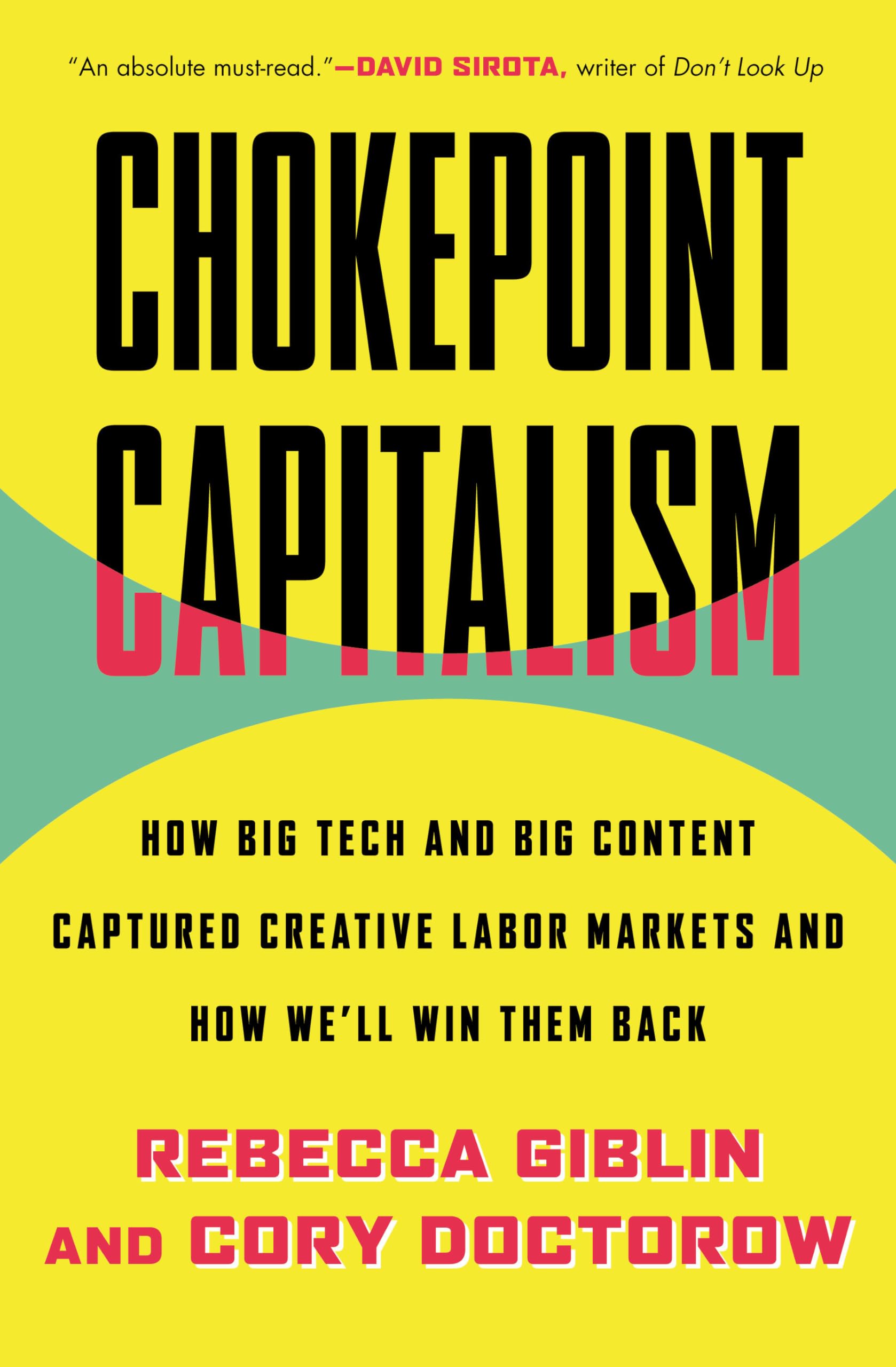
Chokepoint Capitalism: How Big Tech and Big Content Captured Creative Labor Markets and How We'll Win Them Back


Q**L
It’s time for a change
Insightful information into how we have allowed monopolies to form and what we can (and should) now do about it.
M**H
Have you had enough and don’t want to take it anymore?
If you feel that somehow the system is broken, that the rich and powerful are getting richer and more powerful and that the rest of us are on a treadmill, read this book to find out why, along with some suggestions on how to make the changes we all need.This book is well researched and well written.
J**F
Regretable typeset
Not sure I can comment on the substance, because the typesetting is tiny and in a weird font. I'm not sure I can get through.
M**N
Fascinating and infuriating at the same time
Someone might think that Chokepoint Capitalism by Rebecca Giblin and Cory Doctorow must be dry reading. On the contrary, the authors expose a ruthlessness and greed that is shocking to behold. It’s riveting to read how a few companies control most of the marketplace. If you want to become informed or takes steps to bring about change, this is a helpful guide.A key concept hurting suppliers and workers is monopsony: buyers having power over creators of content. When sellers have power over buyers that is the more commonly known monopoly. The largest companies are not just powerful sellers. They are major buyers that reduce the rates paid to producers and suppliers. To illustrate with a personal example, I am an independent publisher of books by a particular author. If I want to see them sold in the biggest markets, I must accept the rates established by the seller. Alternative options that provide higher rates of return may come at the cost of significantly lower sales.Despite showing how effectively competition has been reduced readers are not left without hope. The authors provide practical suggestions, including what has made a difference in specific situations. They show that joining with like-minded individuals for small beginnings can upend the status quo.Personally, I wonder if I should try to make less use of the entities whose philosophy and practices are disappointing to say the least? With limited alternatives it seems like most creators are resigned to what they offer because it can be a matter of survival. I guess I’m one of them having been helped more than hurt. I respect, however, the authors for refusing to allow DRM on the electronic and audio editions of this book. They don’t want readers to be locked into one platform.More then ever this makes me want to support independent artists and suppliers. We might see their projects advertised through various funding campaigns.It’s puzzling that the major players don’t seem to recognize that justice and generosity can be rewarding and profitable. Even if this were not true, a respected name and integrity are of more value than great riches.I imagine there are more like me that want to support endeavors that care for more than just the bottom line. Short term thinking can jeopardize the potential for having repeat business and loyal customers. Unfair practices and policy are not the way to go. A poor reputation will mean fewer customers.The authors provide an excellent historical perspective and they make even the more technical aspects understandable even though I had to read some sections more than once. It’s just that I’m not familiar with some of the concepts. I learned a lot and my interest never wavered. It’s fascinating and infuriating at the same time.As others have rightly pointed out, true success is measured by how you treat others. It’s a lesson that even corporations can learn in how they relate to not only customers but their employees. I appreciate how the book makes me think along these lines.
T**W
Good explanation of how we got here.
I knew about many monopolies in the farm and food industries. This did a good job of explaining how the news, radio, and others got to where we are now. Must read for anyone who wants to understand how things like Ticketmaster and the excessive fees that make events so much more expensive now have been allowed. We can't begin to correct what we don't understand.
P**L
A Stunning & Eye-Opening Exegesis of Power
I listened to this book on audio and had to buy a print edition, as it’s something I will want to return to many times.I am a professional creative. I receive checks for a hundred dollars every so often on projects I’ve written that have made millions for others. I am not the least bit unique. This book explains why workaday musicians and writers make less and less money while their increasingly monopolistic industries report record profits.It’s a bitter pill, but critical for any creative who wants to start restrategizing how they keep the lights on. Unfortunately, no one is going to do it for us.
A**S
Definitely geared to a specific audience
The target audience is the subject - the creative artists. I found the language and terminology frequently so specific that I couldn’t completely grasp the points being made.
A**M
Thorough, well-paced look at the effects of monopolies in the arts
Boast: I bought this book from a local indie bookstore. This detail is meaningful because Giblin and Doctorow survey all the big companies in movies, music, publishing, etc. and find them guilty of ripping off both customers and creative contributors—and still worse, guilty of controlling their choices.This book concentrates on artistic and creative work, which is important in its own right: These activities are some of the most lucrative and highly visible of all industries. But the authors connect the issues to larger economic and social justice movements, as well as a somewhat understated philosophy of human independence and freedom.By the end of Part 1, you will be ready to cancel all your media subscriptions and go live under a rock. Part 2 looks at current and potential measures to give us back our freedom.Giblin and Doctorow assume some background knowledge of the reader. They never explain what DRM is or how it works, launching instead straight into some sophisticated topics associated with it. You should know the difference between vertical and horizontal integration, as another example. I expect that Giblin's and Doctorow's audience will have the necessary background, but I think they could have broadened their audience by adding a few more explanations.
Trustpilot
5 days ago
2 days ago
2 weeks ago
2 months ago