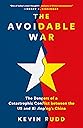
The Avoidable War: The Dangers of a Catastrophic Conflict between the US and Xi Jinping's China
Product ID: 426893183
Desertcart purchases this item on your behalf and handles shipping, customs, and support to Sri Lanka.
A war between China and the US would be catastrophic, deadly, and destructive. Unfortunately, it is no longer unthinkable. The relationship between the US and China, the world’s two superpowers, is peculiarly volatile. It rests on a seismic fault—of cultural misunderstanding, historical grievance, and ideological incompatibility. No other nations are so quick to offend and be offended. Their militaries play a dangerous game of chicken, corporations steal intellectual property, intelligence satellites peer, and AI technicians plot. The capacity for either country to cross a fatal line grows daily. Kevin Rudd, a former Australian prime minister who has studied, lived in, and worked with China for more than forty years, is one of the very few people who can offer real insight into the mindsets of the leadership whose judgment will determine if a war will be fought. The Avoidable War demystifies the actions of both sides, explaining and translating them for the benefit of the other. Geopolitical disaster is still avoidable, but only if these two giants can find a way to coexist without betraying their core interests through what Rudd calls “managed strategic competition.” Should they fail, down that path lies the possibility of a war that could rewrite the future of both countries, and the world. Review: Kevin Rudd has done us a great service - If you only read one book about the contentious relationship between the US and China, it should be this one. There are many other books around that purport to examine the bilateral relationship and predict the future, but this is the only one written by someone who is a life-long student of China, who speaks Mandarin, and who knows most the important players, having been an Australian foreign service officer in Beijing, an Australian state government official, and having served as prime minister twice. Rudd begins with a tale evocative of "The Band Played Waltzing Matilda", marching in an ANZUS Day (their Memorial Day) parade with his father, a veteran of WW II, still suffering from its effects. Then he recounts the staggering losses in several wars of the 20th Century...and also Neville Chamberlain's "Peace with Honor" speech as a cautionary tale on the folly of war and the danger of willful acquiescence to tyranny which produces neither peace nor honor. Only by understanding each other can the US and China avoid a fate worse than anything those bloody conflicts produced. And, unfortunately, we do not understand each other. Rudd lays out his task...to explain why we say one thing and the Chinese hear another by examining the bilateral relationship going back to our first contact and the many historical issues that we in the US rarely consider, but are part of China's thought process even today. He examines the seemingly polar opposite views from Washington and Beijing on most important issues, but concludes that there is hope, despite the radically different world views, that we can avoid "Thucydide's Trap". But, to have any hope of doing so, we must do a much better job of understanding each other. Few US policymakers or politicians know much about China beyond politically useful slogans, even fewer actually speak the language. Fewer still know anything substantial about China's leaders or what motivates their actions. Rudd tells us by organizing much of the book around Xi Jinping's "Ten Concentric Circles of Interest", and devotes a chapter to discussion of each. As a student of China myself for 40 years, I've never seen such a logical and informed expositon of Xi's (which is China's) priorities and motivations. In the final chapters Rudd examines the US response, the politics of the Twentieth Party Congress and its crucial importance, the dangers in the coming decade and how strategic competition can be managed to avoid a war. This book should be required reading for any US politician BEFORE they open their mouth about China. Here are the facts, not some polemic or conspiracy tinged harangue by a jilted lover, like another much read book on China that purports to expose Beijing's nefarious plan for World domination. If we are to avoid the worst, we must be prepared. Thanks to Kevin Rudd, there is at least a chance that we can be. Review: Illuminating perspective on the underlying tensions between the US and China - The Avoidable War is a very timely book on the high tensions that exist between the US and China at the moment. It was published in March, soon after the Russia invasion of Ukraine and as such is very well timed in terms of its relevance. Of course the book must have been a project that has been worked on for quite some time now so it also indicates the author's predictive understanding of the growing conflicts that are now manifesting themselves in devastating actions at the level of nation state. The Avoidable War is an overview of the author's beliefs about the narratives that drive both the US and China's position on both the global and domestic arenas. It spends much time discussing the priority hierarchy that potentially drives the CCP actions an in particular it attempts to frame the mindset of Xi Xinping. The author spends time on the perspective of both China and the US but spends much more time on China. As a former prime minister of Australia as well as a long time student of China, Kevin Rudd is truly an expert on the subject he is covering and has met extensively with global leaders throughout his career. The author begins by giving the historical relationship between the US and China and the thawing between the two with Nixon opening up to China. He gives a background to the hopes of the US in its early embrace and the contradicting core values that have remained at the center of the CCP with small blips perhaps in the 80s. The author then goes on to discuss how trust is now at a historical low with the failure of globalization to be equitable in its economic outcomes for many classes and with the Trump phenomenon coming to full force in the recent years. Both sides can agree on little common ground and as such each views the others actions through the most pessimistic lens and this is makes compromise increasingly difficult with both actors digging their heels in on their own world views. The author moves on to discussing Xi Xinping, a leader who has disappointed much of the world with a pull to the right for China and its nationalism. The author has met and had overlap with Xi Xinping on the order of 3 decades when the author was a young diplomat in China. He gives his perspective on the man and his character and worldview. At the core the author describes Xi as a man who is committed to taking China to its "rightful place" on the world stage. There is much historical baggage to this perspective in which wrongs from hundreds of years ago are relevant for todays dismissal of the intent of liberalism. Furthermore the author highlights Xi's lack of comfort in economics but strong calculations with regards to politics. The author moves on to the hierarchy of concerns that drive the party's calculations, first and foremost is the sustained ruling ability for the CCP. This maintenance of power is of more importance than any other consideration and as such is a subject for which any use of force can be justified if the Party's authority becomes at risk. Another critical concern is how to unify the vast population of China to achieve the common goals of the country, from this drives a use of Nationalism to create cohesion on a group of the scale of China. This has substantial risks as a strategy as nationalist fervour can be challenging to contain when it blows up. The author of course highlights the need for China to deliver economic growth to maintain its mandate to govern the population. One can see that economics can be subordinated to other priorities in times like now given their Covid lockdowns but there is still a core focus on improving living standards as a critical pillar for the party to focus on. The author also discusses longer term objectives like modernizing the military and developing its technological expertise. Topics like the construction of bases in the South China Sea are discussed as well as the development of a blue water fleet. The author also highlights how projects like the Belt and Road initiative are important for China to create a web of dependable economic relationships with its neighbors as well as some of the frictions that come from the lack of institutional oversight of projects. The author weaves this into its overall leverage building with neighbors through infrastructure aid and other moves to create dependencies. There is a much lower soft power component to China's initiatives but it still creates benefits for many recipients especially while the US has stepped back from its overseas engagement. The author then focuses on the desire to change the global order. This can be seen on a day to day basis with the overall dismissal of the idea that the liberal order is the legitimate one and so the longer term re-design of global institutions which were an outgrowth of the WWII aftermath is a continued project from China. The author then moves on the US which is a fraction of the book and discusses the US's disappointment in the path that China has taken. He discusses how the US feels like it was cheated by the steps China took in its integration into the worlds economy and how it did not follow through on core promises with regards to its own economy. With a revised view on China and the expected path of its political economy the perspectives on the benefits of engagement are now considered to be substantially outweighed by the detrimental consequences and as such a decoupling has started. The US has yet to adjust what it can offer allies so that they can regain some of the standing that it had prior to Trump and military aid remains the more de facto form of aid than greater trade and economic benefits. Nonetheless this will start to change and one can see from the revival of Nato that some aspects of these trends are starting to reverse due to global events. The author ends with the dangers that come from this growing conflict of fairness on the world stage but notes the deep connections between the two countries from a financial standpoint. He highlights some mechanisms that might be used to prevent unintentional misunderstood signals and the need for policies that mimic how the US and the Soviet Union tried to prevent disaster through protocols. Overall the author tries to highlight where the grievances stem from and how both sides need to better understand each other such that conflict becomes less likely but ultimately there are deep ideological divides that are now obvious and impossible to reconcile. That being said at least part of this conflict stems from leadership personalities that catalyze escalation when friction shows itself namely with Trump and Xi and as such some revision from leadership should be a key ingredient to any normalization. It appears unlikely that anything like that can be expected right now as politically nationalism and the views on the clash of civilizations is on the rise. Overall The Avoidable War is a well timed and insightful book that can help the reader understand China's calculus better.

| Best Sellers Rank | #102,489 in Books ( See Top 100 in Books ) #41 in Chinese History (Books) #44 in Asian Politics #135 in National & International Security (Books) |
| Customer Reviews | 4.6 out of 5 stars 679 Reviews |
J**S
Kevin Rudd has done us a great service
If you only read one book about the contentious relationship between the US and China, it should be this one. There are many other books around that purport to examine the bilateral relationship and predict the future, but this is the only one written by someone who is a life-long student of China, who speaks Mandarin, and who knows most the important players, having been an Australian foreign service officer in Beijing, an Australian state government official, and having served as prime minister twice. Rudd begins with a tale evocative of "The Band Played Waltzing Matilda", marching in an ANZUS Day (their Memorial Day) parade with his father, a veteran of WW II, still suffering from its effects. Then he recounts the staggering losses in several wars of the 20th Century...and also Neville Chamberlain's "Peace with Honor" speech as a cautionary tale on the folly of war and the danger of willful acquiescence to tyranny which produces neither peace nor honor. Only by understanding each other can the US and China avoid a fate worse than anything those bloody conflicts produced. And, unfortunately, we do not understand each other. Rudd lays out his task...to explain why we say one thing and the Chinese hear another by examining the bilateral relationship going back to our first contact and the many historical issues that we in the US rarely consider, but are part of China's thought process even today. He examines the seemingly polar opposite views from Washington and Beijing on most important issues, but concludes that there is hope, despite the radically different world views, that we can avoid "Thucydide's Trap". But, to have any hope of doing so, we must do a much better job of understanding each other. Few US policymakers or politicians know much about China beyond politically useful slogans, even fewer actually speak the language. Fewer still know anything substantial about China's leaders or what motivates their actions. Rudd tells us by organizing much of the book around Xi Jinping's "Ten Concentric Circles of Interest", and devotes a chapter to discussion of each. As a student of China myself for 40 years, I've never seen such a logical and informed expositon of Xi's (which is China's) priorities and motivations. In the final chapters Rudd examines the US response, the politics of the Twentieth Party Congress and its crucial importance, the dangers in the coming decade and how strategic competition can be managed to avoid a war. This book should be required reading for any US politician BEFORE they open their mouth about China. Here are the facts, not some polemic or conspiracy tinged harangue by a jilted lover, like another much read book on China that purports to expose Beijing's nefarious plan for World domination. If we are to avoid the worst, we must be prepared. Thanks to Kevin Rudd, there is at least a chance that we can be.
A**N
Illuminating perspective on the underlying tensions between the US and China
The Avoidable War is a very timely book on the high tensions that exist between the US and China at the moment. It was published in March, soon after the Russia invasion of Ukraine and as such is very well timed in terms of its relevance. Of course the book must have been a project that has been worked on for quite some time now so it also indicates the author's predictive understanding of the growing conflicts that are now manifesting themselves in devastating actions at the level of nation state. The Avoidable War is an overview of the author's beliefs about the narratives that drive both the US and China's position on both the global and domestic arenas. It spends much time discussing the priority hierarchy that potentially drives the CCP actions an in particular it attempts to frame the mindset of Xi Xinping. The author spends time on the perspective of both China and the US but spends much more time on China. As a former prime minister of Australia as well as a long time student of China, Kevin Rudd is truly an expert on the subject he is covering and has met extensively with global leaders throughout his career. The author begins by giving the historical relationship between the US and China and the thawing between the two with Nixon opening up to China. He gives a background to the hopes of the US in its early embrace and the contradicting core values that have remained at the center of the CCP with small blips perhaps in the 80s. The author then goes on to discuss how trust is now at a historical low with the failure of globalization to be equitable in its economic outcomes for many classes and with the Trump phenomenon coming to full force in the recent years. Both sides can agree on little common ground and as such each views the others actions through the most pessimistic lens and this is makes compromise increasingly difficult with both actors digging their heels in on their own world views. The author moves on to discussing Xi Xinping, a leader who has disappointed much of the world with a pull to the right for China and its nationalism. The author has met and had overlap with Xi Xinping on the order of 3 decades when the author was a young diplomat in China. He gives his perspective on the man and his character and worldview. At the core the author describes Xi as a man who is committed to taking China to its "rightful place" on the world stage. There is much historical baggage to this perspective in which wrongs from hundreds of years ago are relevant for todays dismissal of the intent of liberalism. Furthermore the author highlights Xi's lack of comfort in economics but strong calculations with regards to politics. The author moves on to the hierarchy of concerns that drive the party's calculations, first and foremost is the sustained ruling ability for the CCP. This maintenance of power is of more importance than any other consideration and as such is a subject for which any use of force can be justified if the Party's authority becomes at risk. Another critical concern is how to unify the vast population of China to achieve the common goals of the country, from this drives a use of Nationalism to create cohesion on a group of the scale of China. This has substantial risks as a strategy as nationalist fervour can be challenging to contain when it blows up. The author of course highlights the need for China to deliver economic growth to maintain its mandate to govern the population. One can see that economics can be subordinated to other priorities in times like now given their Covid lockdowns but there is still a core focus on improving living standards as a critical pillar for the party to focus on. The author also discusses longer term objectives like modernizing the military and developing its technological expertise. Topics like the construction of bases in the South China Sea are discussed as well as the development of a blue water fleet. The author also highlights how projects like the Belt and Road initiative are important for China to create a web of dependable economic relationships with its neighbors as well as some of the frictions that come from the lack of institutional oversight of projects. The author weaves this into its overall leverage building with neighbors through infrastructure aid and other moves to create dependencies. There is a much lower soft power component to China's initiatives but it still creates benefits for many recipients especially while the US has stepped back from its overseas engagement. The author then focuses on the desire to change the global order. This can be seen on a day to day basis with the overall dismissal of the idea that the liberal order is the legitimate one and so the longer term re-design of global institutions which were an outgrowth of the WWII aftermath is a continued project from China. The author then moves on the US which is a fraction of the book and discusses the US's disappointment in the path that China has taken. He discusses how the US feels like it was cheated by the steps China took in its integration into the worlds economy and how it did not follow through on core promises with regards to its own economy. With a revised view on China and the expected path of its political economy the perspectives on the benefits of engagement are now considered to be substantially outweighed by the detrimental consequences and as such a decoupling has started. The US has yet to adjust what it can offer allies so that they can regain some of the standing that it had prior to Trump and military aid remains the more de facto form of aid than greater trade and economic benefits. Nonetheless this will start to change and one can see from the revival of Nato that some aspects of these trends are starting to reverse due to global events. The author ends with the dangers that come from this growing conflict of fairness on the world stage but notes the deep connections between the two countries from a financial standpoint. He highlights some mechanisms that might be used to prevent unintentional misunderstood signals and the need for policies that mimic how the US and the Soviet Union tried to prevent disaster through protocols. Overall the author tries to highlight where the grievances stem from and how both sides need to better understand each other such that conflict becomes less likely but ultimately there are deep ideological divides that are now obvious and impossible to reconcile. That being said at least part of this conflict stems from leadership personalities that catalyze escalation when friction shows itself namely with Trump and Xi and as such some revision from leadership should be a key ingredient to any normalization. It appears unlikely that anything like that can be expected right now as politically nationalism and the views on the clash of civilizations is on the rise. Overall The Avoidable War is a well timed and insightful book that can help the reader understand China's calculus better.
J**E
A most illuminating and insightful book.
I listened to the audio version and then purchased a hard copy to read for a second time. Mr Rudd has come up with the type of analysis and insights rarely seen from a politician these days. The fact he speaks Chinese and had been on the inside, has in no doubt aided him in his endeavor by making a clear sense of a most complex domestic and geopolitical situation and then proposing realistic solutions. He uses ample data to support many of his thesis but only where it is needed and necessary. The writing is equally crisp, direct and in some places passionate and powerful. This is truly a must read for anyone who is interested or bothered by what is going on between China and the US, especially for those who are likely briefed daily on those matters but choose to stick to his or her own beliefs because of oversized arrogance or sheer ignorance on both sides. Now I come to a few areas where I somewhat disagree or perhaps hope to add to the author’s perspectives without giving things away. First of all, while Mr Rudd’s 10 circles of relative strategic importance of Xi Jinping’s priorities are the most comprehensive I have seen for completeness, I am afraid he is giving the communist leader too much credit for his overall mindset and intelligence. Xi is certainly an astute student of revolutionary politics and has proven ruthless in its prosecution. However, he is quite behind his contemporaries when it comes to economics and geopolitical prowess in today’s international environment. As a result, many of the strongman and imperial style ambitions he expresses may never be carried out. Even if he attempts, disastrous outcomes await his regime and the Chinese people at large. China under Xi Jinping is therefore likely to be aggressive in name only but not in substance, some of which Mr Rudd has also alluded to. Secondly, much of Xi Jinping’s actions at present are no more than political power posturing for Chinese domestic consumption. Just like Mao Zedong some 70 years before, China will not start a war with the US over Taiwan for fear of losing to the US and therefore see its one party legitimacy in jeopardy. To that end, a preemptive attack on the US in the Pacific to exploit a strategic first mover advantage is even less plausible. Having said that, I do think chances for an accidental military confrontation due to miscalculation are nonetheless real between China and the US but of limited consequence. Thirdly, there are also hawkish factions in the US which are spoiling for a major war just to defeat China in an epic battle between “the good and evil.” The last thing China wants is to be coerced into such an eventuality where the loser is bound to be itself regardless of its economic size and military preparedness. At the end of day, close to half of China’s population still barely survives with $1000 per year, a dismal distance from even the least prosperous of developed countries. So what if Taiwan decides to breach the red line and declares independence in the near term? This would definitely incur Xi’s wrath and bring China and the US immediately to the brink of war, leaving him with no choice. I however hope that smarter minds and cooler heads can prevail under such a scenario. The most common sense response is to simply refuse to acknowledge Taiwan’s legitimacy and cut off diplomatic and economic relations with any country which chooses to recognize Taiwan as a sovereign country. Unless there is a global boycott of China should it choose military intervention, I doubt any of the countries including the major Western Powers will take sides with the renegade province, especially if China chooses a non-military approach. If Xi Jinping indeed has the interest of the Chinese people at heart, then China’s sheer scale in territorial size and population coupled with sustained economic growth will see its economy return to global dominance, eclipsing any other country by a large margin in 20-25 years. Xi Jinping may not see Taiwan return to the motherland in his lifetime, but if there is a legacy to speak of for himself, it would be the laying of the foundation for 1000 years of Chinese Rejuvenation. By then, who will ever care about Taiwan?
D**T
Maybe Too Late
Fascinating book by an extremely intelligent and experienced politician, diplomat, and scholar. Avoiding war is always the best policy. This book clarifies how the US and China misunderstand each other and why they are in conflict. It suggests a framework for managing the conflict short of war. The problem is that it couldn't imagine how Trump has destroyed US soft power and weakened our military. It will take decades for the US to get back to what it's assumed to be in this book. In the meantime a resurgent China may be tempted to do something rash, a weak US might react thoughtlessly, and catastrophe could result.
B**N
Excellent Book to Learn about the Real China
I decided to pick up this book to learn about China, now one of the most important countries. This book focuses on TRUST - “Can We Trust China?” This reading reminded me of a very relevant story I heard from a Vietnamese friend some time ago. He said his Chinese father never needed a paper contract in conducting his business for decades in Vietnam. His trusted customers can pick up products and needed only pay his father after they have sold the products. This was done verbally without any paper contract. A new customer would be given a chance to start small and prove his/her trustworthy in time. If anyone cheats, the words of mouth would spread quickly in the trusting community; and it would be very difficult for this bad person to rejoin this Chinese business community again. My friend said he never heard any one cheated and his father never had a lawyer. The “trust” stories in the book are different but it tells the same “trust” I learned from this friend. It is very interesting to see someone elaborating this topic in a book in great depth. It is written in away enjoyable to read. Despite I have heard a similar story before, I still learn a lot more from this book. This is absolutely a great book anyone can learn in order to be successful with China or Chinese.
K**R
A sobering, yet hopeful, prescription for managing the U.S.-China competition
A masterful addition to the literature on U.S.-China relations. At times, an “outsider” (who nonetheless has spent much of his life on both sides of the relationship) is sorely needed to bring a critical disinterested perspective to a bilateral foreign policy problem that threatens to spiral out of control. Former PM Rudd does exactly that with this book. The best book on US-China relations I’ve read in the past few years. Clear, concise, compelling. No overly rosy views offered here. PM Rudd provides a realist’s view of the US-China relationship, with a considerable dose of neoclassical liberalism thrown in for good measure. It’s a highly effective combination.
E**R
Kevin Rudd sees the danger of a surging China but lacks Reagan's and Thatcher's moral clarity
In The Avoidable War: The Dangers of a Catastrophic Conflict between the US and Xi Jinping’s China former Australian Labor Prime Minister Kevin Rudd offers insight, gloom, and counsel for America. Since cousin Great Britain passed the baton during WW2, America has been the world’s preeminent military, economic, and cultural power, and the architect and guarantor of the reigning liberal Western world order. Challenger China, however, is on the rise, and, increasingly, locking horns with the US. Rudd worries the burgeoning Sino-American conflict will ignite into a hot war. After tyrant and mass murderer Mao Zedong died in 1976, pragmatic Deng Xiaoping become the Middle Kingdom’s paramount leader. Deng downplayed Marxist-Leninist doctrine and loosened state control of the economy to boost growth, famously quipping “It doesn’t matter if a cat is black or white so long as it catches mice.” Private-sector entrepreneurs were free to prosper, so long as that benefited the state, vivifying a sclerotic economy. However, despite the hopes of many in the West, the Chinese Communist Party didn’t loosen its grip on political power. Playing a long game to strengthen China, Deng sought engagement rather than confrontation with the outside world. The US welcomed this apparent opening, and helped, supporting China’s accession to the WTO, providing the biggest market for the looming manufacturing colossus, and supplying needed technology. America operated on the wishful assumption the Middle Kingdom would inexorably liberalize and integrate into the US-led rules-based liberal world order. Now, by many measures, a surging China is the world’s number two power and aspires for ascendancy. President for Life Xi is in more of hurry than his predecessors. He’s purged the CCP of rivals, installed his myrmidons to head the military (“the gun”), the propaganda wing (“the pen”), and internal security (“the knife”), brought the oligarchs to heel, and extinguished nascent embers of freedom. Xi is the Middle Kingdom’s most powerful ruler since Mao. Barring a health issue or assassination, he’s likely to reign for years to come. Rudd characterizes Xi’s worldview as “Marxist-Nationalist.” Xi’s China is increasingly ideological, nationalist, assertive abroad, and intolerant of internal dissent. He’s reinvigorated the CCP’s Marxist-Leninist foundations, turbocharged Chinese nationalism, and sharpened the country’s ambitions. A recent Pentagon-sponsored RAND study concluded, "China’s rise in power on the world stage may produce a low-intensity conflict or a major war with the U.S.” RAND warns the US could “find itself confronting a peer rival for global leadership possessing far greater power than the Soviet Union ever held.” Like the USSR it threatens its neighbors and seeks world domination. But with 1.4 billion people, the world’s second largest economy, and greater technological prowess than the USSR, China is a more formidable foe. Under Emperor Xi, the greater China’s military, economic, and technologic power relative to America’s, the greater the risk of war - or America ceding spheres of influence to Beijing. In Danger Zone: the Coming Conflict with China US academics Hal Brands and Michael Beckley echo Rudd’s and RAND’s fear. But they worry China’s near-term window is as good as it’s going to get, and that, therefore, maximum danger is nigh. China’s demographic trends are horrific. By bringing the heretofore vibrant private sector to heel, Beijing will slow, if not suffocate economic growth. And increasingly alarmed about the Sino threat, Australia, India, and Japan are ramping up defense spending. While a man of the West – a Davos man! Rudd postures a kind of moral equivalence and political neutrality over the conflict between China and America. Reading The Avoidable War, one could be forgiven for at times thinking Australia didn’t have a stake in the struggle’s outcome. To avoid war, Rudd urges the US and China to adopt “managed strategic competition.” It has the flavor of Nixon’s and Kissinger’s policy of détente with the Soviet Union. Washington and Beijing would still jostle across multiple fronts, but within agreed boundaries. Why, however, would anybody expect Beijing to honor an agreement the second it thought the balance of forces were sufficiently to its advantage that it was no longer in its interest? Rudd himself acknowledges Americans have come to distrust China, with ample cause. Rudd’s Green fundamentalism distracts from his warning and his suggestion that that’s an area for common ground is contrary to China’s and America’s economic interests, which China’s ruling elites understand but many of America’s do not. Projecting his own climate-change alarmism, Rudd declares “on climate change, China’s national economic and environmental interests mandate global cooperation.” Beijing’s actions, however, testify it rightly appreciates maximizing cheap reliable energy to fuel growth is in China’s interest, which is why it has the world’s largest fleet of coal-fired power plants. In Clash of Civilizations political scientist Sam Huntington forecast if American elites remained confident, that the 21st century would be America’s and the West’s, but that that was no certain thing. Huntington viewed the principal threats as Sino and Islamic civilizations. In a similar vein, Rudd contends “The key question today is whether the United States is sufficiently conscious of the dimensions of China’s rise and whether it is still possessed of sufficient political resolve and strategic acumen to deal with this formidable challenge to American regional and global power.” If it isn’t, China will become the dominant power in a darker world. Rudd warns that “if there is no sustained counterstrategy from the United States over the next several US administrations that effectively rebuilds American power, reenergizes US alliances, and creates a credible global economic alternative to the long-term gravitational pull of the Chinese market, the overall trend lines appear to favor Xi Jinping’s China.” Although Beijing’s use of its economic might to advance Sino interests is effective, it’s hardly attractive. As a Sinophile Rudd criticized the CCP’s internal oppression. It’s crushed national minorities like the Uighurs, Tibetans, and Mongolians, extinguished representative government and freedom in Hong Kong, and eliminated or imprisoned countless dissidents. But Rudd’s realism cloaks moral timidity and accommodation. The CCP isn’t going to tolerate political pluralism or transform China into a good-faith pacific partner in the liberal world order. In Red Roulette: An Insider's Story of Wealth, Power, Corruption, and Vengeance in Today's China, Desmond Shum, husband of arrested billionaire Whitney Duan Weihong observes “The Party has an almost animal instinct toward repression and control. It’s one of the foundational tenets of a Leninist system. Anytime the Party can afford to swing toward repression, it will.” Emperor Xi’s CCP has put an exclamation point on Shum’s lament. Given a choice between economic growth and control, the CCP will choose control. Thanks to China’s phenomenal economic growth over the last four decades, Xi and the CCP think they can afford to swing back to repression and are doing so in spades. Beijing is becoming more aggressive abroad. Canberra isn’t going to deter the Chinese colossus. A world without an engaged muscular America, with China as global hegemon, would be decidedly less liberal, less free, and less prosperous. The best Australia could hope for would be to be a tributary state. During the Cold War, Reagan broke with decades of accommodation of the Soviet Union – “the Evil Empire.” His strategy was “We win, they lose.” Reagan had moral clarity and backbone – qualities not much in evidence among Western leaders today - and framed the conflict in moral terms. He rallied the world, gave hope to the oppressed behind the Iron Curtain, and was willing to engage in an arms race the USSR couldn’t win. Rudd suggests hopefully “America has begun to stir.” Pieces of parchment spelling out the terms of strategic managed competition will not deter or constrain Emperor Xi’s China. Military power and prowess matter. While for decades the US looked for opportunities to reduce and deferred modernizing its nuclear arsenal, China is rapidly expanding its nuclear quiver. Today it has the world’s largest navy. At the end of WW2, the US Navy had 6768 ships. Today it has 296. America should modernize and increase its navy, air force, and nuclear arsenal. And, most critically, it must dominate the 21st century’s commanding heights, space. A confident America, militarily, economically and technologically preeminent, with muscular foreign and defense policies and committed allies, will deter imperialist China. Overwhelming American and allied strength, moral clarity, and resolution can check Emperor Xi’s China and keep it from menacing Taiwan, Japan, the Philippines, Vietnam, India, and Australia. Allies are more likely to be committed if America is strong and resolute. Additionally, if the world and Chinese are very lucky, sustain pressure and moral condemnation will precipitate the CCP’s fall, and liberalization within the Middle Kingdom. The Avoidable War is timely and eminently readable. Rudd is clear-eyed about the challenge China poses. He lacks, however, Reagan’s and Thatcher’s moral clarity and stones.
O**T
An invaluable contribution to a timely - and critical - subject
“Avoidable War” is exactly what the title suggests; it is former Australian Prime Minister and Sinologist Kevin Rudd’s attempt to find a way for the United States and China to avoid a potentially catastrophic war, through the concept of “managed strategic competition.” The greatest strength of this book is Rudd’s detailed and thoughtful examination of “Xi Jingping Thought” through his “concentric circles” framework. Unfortunately, Rudd does not devote nearly as much attention to the United States, whose own domestic issues may play as prominently a role as whatever Xi can - or cannot - do in the case of China. Still, this is a careful, well thought, and valuable contribution to the rapidly growing literature on U.S. China relations, one that should be on every American policymaker’s reading list. 4.5/5
A**S
Avoidable or Inevitable?
Interesting perspective from the perspective of a Westerner.
G**K
Insightful and approp book for the times
Insightful and coherent analysis of china, worth reading even if you don’t subscribe to his politics, which really should be irrelevant. Worth getting
D**G
An interesting book
A readable book.
R**Z
Historia
Estaba esperando un libro no unos cds
H**B
Fantastic book
Fantastic book to understand China and it's relationship with the USA. Very thoroughly researched.
Trustpilot
1 month ago
2 weeks ago