
DOWNLOAD THE APP


Customer Services
Copyright © 2025 Desertcart Holdings Limited
DOWNLOAD THE APP


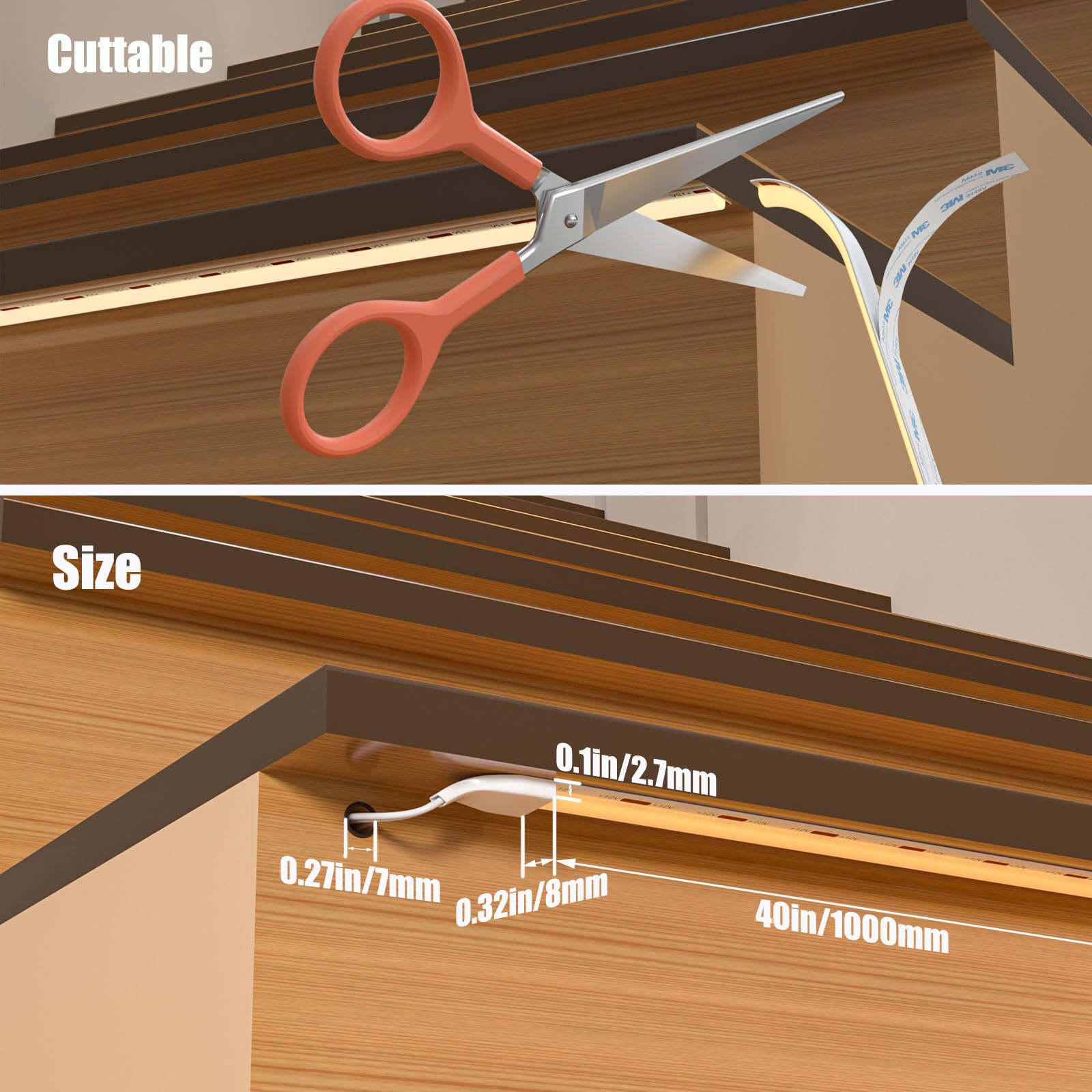

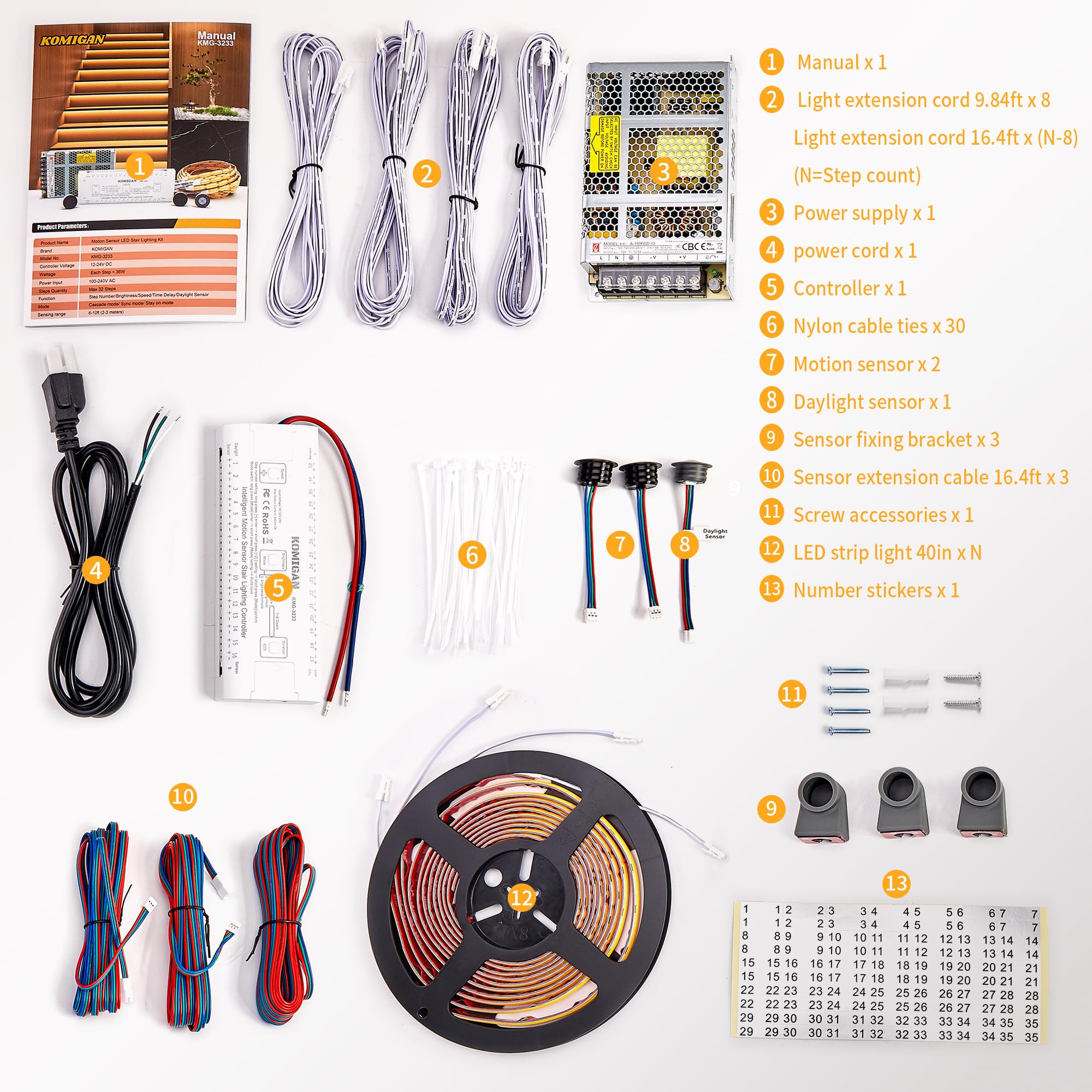
✨ Light up your steps, light up your life! ✨
The KOMIGAN Intelligent Motion Triggered LED Stair Lighting Kit KMG-3233 features 320 high-density COB LEDs delivering 14,000 lumens of cool white (6000K) light. Designed for indoor staircases, its 40" flexible strip is cuttable and adhesive-backed for easy installation on 20 stairs. Motion-activated with customizable settings and remote control, it combines safety, style, and smart home convenience in one polished, energy-efficient package.


| Brand | KOMIGAN |
| Color | Cool White 6000K |
| Material | Plastic |
| Style | Modern |
| Room Type | Staircase |
| Product Dimensions | 3.94"L x 1.97"W x 0.98"H |
| Specific Uses For Product | Indoor use only |
| Indoor/Outdoor Usage | Indoor |
| Power Source | AC |
| Installation Type | Adhesive Mounting |
| Special Feature | Corded |
| Control Method | Touch |
| Light Source Type | LED |
| Finish Type | Polished |
| Number of Light Sources | 20 |
| Voltage | 110 Volts (AC) |
| Theme | People |
| Light Color | Cool White 6000K |
| Included Components | Remote Control |
| Lighting Method | LED |
| Item Weight | 3.18 Kilograms |
| Number of Items | 1 |
| Wattage | 100 watts |
| Controller Type | Remote Control |
| Switch Type | Remote |
| Unit Count | 1.0 Count |
| Water Resistance Level | Not Water Resistant |
| Connectivity Protocol | Wi-Fi |
| Brightness | 14000 Lumen |
| Efficiency | energy efficient |
| Mounting Type | Wall Mount |
| Shade Color | White |
| Fixture Type | Non Removable |
| Assembly Required | Yes |
| Manufacturer | KOMIGAN |
| Size | 20 Stairs |
| Recommended Uses For Product | Ambient Lighting |
| Part Number | st-ting-l363 |
| Item Weight | 6.98 pounds |
| Item model number | KMG-3233-CW-20 |
| Finish types | Polished |
| Maximum Compatible Wattage | 200 Watts |
| Special Features | Corded |
| Batteries Included? | No |
| Batteries Required? | No |
| Color Temperature | 6000 Kelvin |
P**C
Installation with a finished closet under the stairs (Detailed)
The media could not be loaded. This is a great addition to our stairway that makes a 180 degree turn. We often slowly navigated the stairs at night without turning the lights on to avoid waking everyone or even after dark when carrying things like laundry and not able to switch the lights on with hands full. This solved that dangerous issue. It also adds a cool, modern touch - people love it.Now, there are many reviews you can read on this product, but I didn't see any that addressed a situation like ours where we had a finished closet under our stairway. Most every review stated that you need access to the unfinished underside of your stairs. This is largely true for most people - but I happen to have years of experience doing electrical work in finished homes and have learned to fish wires almost anywhere. What I did is obviously possible, but it's not for the average DIYer. The point is to show that it CAN be done if you really want it. I did this as part of a re-tread project where we removed carpet and installed new hardwood treads. Unlike many stairs, our staircase was a prefabricated pine staircase with all pieces joined together, so the steps and risers could not be removed. Because I couldn't remove the treads, I had to cut the bullnose off each original tread and lay the new hardwood tread over it. I had to cut the bullnose off to keep the tread depths uniform and code compliant. I left a small space where the LEDs would be hidden behind the new stair nose (the strips are 5/16" wide).Our staircase is typical to a split-level home. It rises 7 steps to a landing where you turn 180 degrees and then take an additional 7 steps to the top. Under the stairs is a finished coat closet that serves the first floor. Knowing home construction, I first built a small door through the lower back of the closet, revealing a sizeable space we use as storage for Christmas and other seasonal decorations. This space provides access to the underside of the landing and the first 7 steps. The top 7 steps are over the sheetrocked closet of which there is no access without cutting holes in it, which we wanted to avoid. Typical installation is to drill the LED tails straight back through the stair riser and into the rear, unfinished side of the stairs. I used that technique for the first 7 steps I had underside access to. For the stairs over the closet, I used some knowledge and technique to drill the LED lights through the side of the steps and into the stud bay between the flights of stairs. I carefully drilled the hole into the bay behind each stair nose so the hole was hidden. I inserted pull strings and then drilled holes for each light UP into the bays from underneath the landing. I then fished out each string and pulled the LED wires out. Drilling the bays required a specialized 36 inch long 3/8" drill bit, since the slope of the staircase required longer reaches into the bays (one of my photos show these holes after the wire was fished out. One hole was drilled for each LED to ensure they didn't get tangled when fishing them). Don't forget to run a wire for each motion sensor - one at the bottom step and the other at the top step. This is what activates the LEDs as you approach the stair from either top or bottom. The system has two motion sensor ports - activating the top sensor starts the lighting from the top, activating the lower sensor starts the lighting from the bottom.Make sure you take a few minutes to plan out which lengths of LED wires you use for each step. I purchased the 16 LED kit and it has (8) 5-meter lengths and (8) 8-meter lengths (16 ft & 24 ft). The lengths you use on each stair depends on where the controller is located. Carrying over from my past days in the field, it was important to me to neatly and professionally route all the wiring. I saw too many reviews and YT videos that had a jumble of wire laying on the floor or hastily coiled up since no one can see it. That's a no-go with me. I left a small "service loop" near each connector then bundled, strapped and routed each wire along the staircase and fished them into the bay of the coat closet wall where I decided to put the controller. I put the controller in the finished closet where it can be secure, yet easily accessible. I had an old metal enclosure that was perfect to house the controller and power supply. While I was under the staircase, I tapped a receptacle serving the living room and installed a receptacle under the controller.My personal installation notes: The LED strips can be cut to fit the width of your treads, but the cut MUST be made through any of the gold 12V terminal markings along the strip (see photo). Use a sharp set of snips to cut it, as you want the cut to be clean and sharp. Once cut, they cannot be extended. As for fastening the LED strips: I peeled the adhesive backing from the strips but also lightly dotted the strips with gorilla glue as I pulled it taught and pressed them into place. My reasoning for not gluing the entire length was first it didn't need that much and second in case I ever need to replace one, it would come off with some effort but not be a massive undertaking. My new treads have a square bullnose with an overhang and these strips lay behind it. I positioned it this way so the LEDs on the higher steps don't glare in your eyes when activated. The light just falls onto each step to light your way. When you're terminating each wire onto the controller, make sure you insert them in the order of each step (1st step, 2nd step, 3rd step, etc.) If you decide to "cascade" them (the most popular method), the LEDs will be activated in the order they were terminated. If they're out of order it will ruin the effect. If you're having them turn on simultaneously, it wouldn't matter - but no matter what, I would personally ensure they are in order - that's just how I am. Don't forget to also run a wire for the daylight sensor. This should be facing normal ambient room light and will prevent the LEDs from activating during the day. You can opt not to install this and the LEDs will simply light anytime you use the stairs, day or night.In summary, this is a cool and very functional system. My situation entailed a lot of planning and intricate wire running and may either be outside most people's skill set or not be worth the time to others. My wife wanted it and the safety factor made it a plus. Installations where you have complete access to the underside of your steps are a no brainer and easy to do if you're even mildly mechanically inclined. Mine was definitely more challenging for most people, but I happen to have the resources and skill set to do it, so all in it was just a Saturday's worth of work for me. I saw some YT videos showcasing sloppy, rushed and unimpressive installations where you can see the LED strips in plain view, you can see the holes were the wires go into, the lights from the upper treads glare in your eyes from the bottom or the wiring behind the stairs is an awful mess. If not done correctly, this project can come out terrible. My advice that I use in some of my other installation reviews echo's Dirty Harry's sentiment...."A man's got to know his limitations...."NOTE: I purchased this item on Amazon for full price and have no affiliation to the seller. I try to write helpful, unbiased and insightful reviews because I also read reviews prior to making my own buying decisions. I notice many reviews lack helpful information, are too brief and don't support their opinions with examples. Writing useful reviews helps pay it forward.
S**L
Expensive, but they worth every penny!
The media could not be loaded. Great product, takes time to install, but it looks and works great. They are not dimmable, neither the driver or the power source, but for me were really easy to figure out and install.
J**A
Glow in the dark
The media could not be loaded. Awesome product !!I got so many compliments on my steps 🙌🏼I must say that light has different settings for speed, as well for the color/intensity of the light.You will need obviously a pro to install it.Make sure (owner) you save the numbered stickers and after each step light has been assigned, then you use the stickers numbers correctly, don’t add the numbered stickers first, friendly advice.You can also use a “smart plug” and control the settings with your cell phone. I got the smart plug, I just haven’t downloaded the app to control the lights with my cellphone, cause the speed/light tone is how I choose to.Recommend to give your home a nice look, and to sabe time turning light on while on the dark. Sensor will pick movement as soon as you move your leg. Aside any redundancy the sensors aren’t over sensitive.Remember, you will need to have access anytime time to get to installation underneath the steps in case of repairs may need to be made.Not only my handy man suggested the idea, but also work nicely and super detailed oriented. I got a good one and I’m thankful for it!! 🙏🏼💯
K**N
Alluring Magic Lights for your Stairs
The media could not be loaded. Post updated!! Komigan sent me two new sensors free!! Installed them and it works like a champ. Upgrading to five stars!!PS your furry family members can set this off at will so be advised to really carefully consider sensor placement for your application. End of updated post.When you install this, you must have unfettered access to the underside of the staircase. In my case, this is the basement staircase to a finished basement; the stairs are next to the utility room. You will be confronted with wires galore as you work them back to a central location. I decided to get a poly enclosure for the power supply and controller. I also ran two 12v lights off the power supply to light the area. Labeling the wires is essential. The stickers that came with the system were dried out and useless, so I made my own. Make sure you test your sensors before running the wires and installing them; one of my sensors was bad and I contacted Komigan for a replacement, I am still waiting. Apparently, they are shipping from China. To buy a set of sensors is $20 on their website, but $38 in shipping to VA. I'll update this post if I don't receive them. I made a wire loom to keep track of all the wires and organize them, otherwise you have wire spaghetti, and it is not what you want, even if this is low voltage, it just looks horrible before you get it organized. I used cable glands and drilled holes into the poly case enclosure to keep it neat. Programming the system was a breeze and it works flawlessly. I replaced the stair treads with this installation, the wood is African Mahogany, known also as Sapele. I but a groove on the underside of the bullnose to accommodate the light strip. They are invisible until they come on. The one item that needs work will be where you drill the holes through the riser to get them to the controller. It will require some caulk and paint touchup if you have a similar installation. I showed this to my friends and family, and they are amazed. Overall, a great idea if you have the skills to install. It is not that difficult, but you will need some patience. I spent a weekend putting this together so invest the time necessary to do it right. One thing this project taught me is that you can install 12V SMD lights virtually anywhere and it isn't that hard. I'll be putting more lights under the toe kick in the kitchen next!
Trustpilot
2 days ago
3 weeks ago