Desertcart purchases this item on your behalf and handles shipping, customs, and support to Sri Lanka.
📖 Unlock the full power of Japanese Kanji — your ultimate language edge!
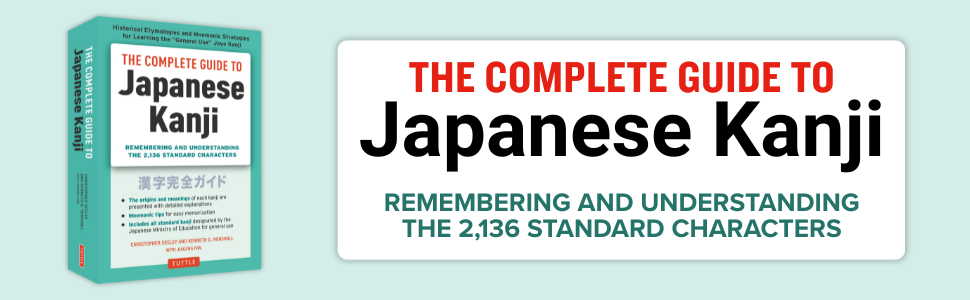
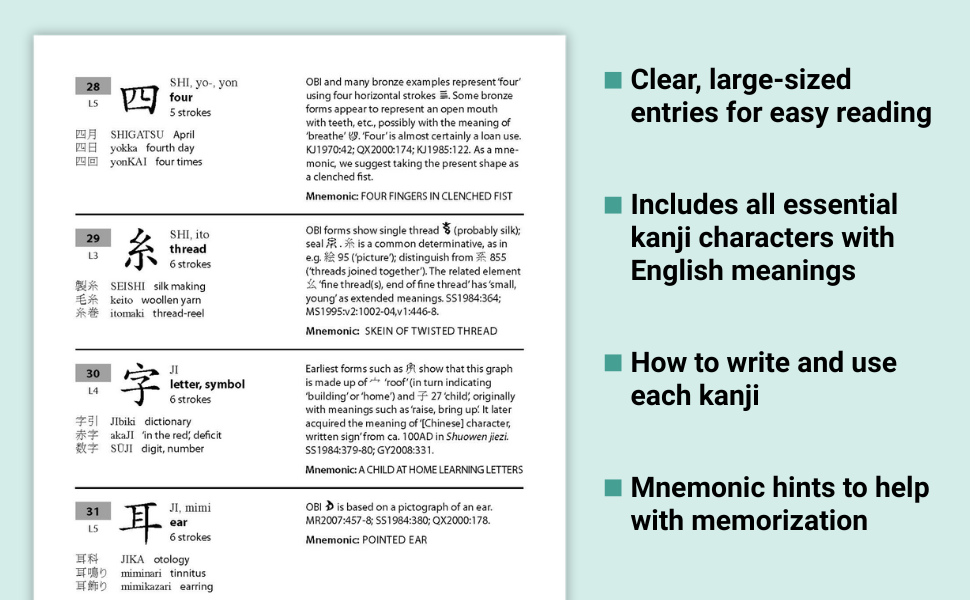
This definitive guide covers all 2,136 official Joyo Kanji characters with detailed readings, meanings, stroke counts, mnemonic aids, and historical context. Perfectly structured for JLPT learners and language enthusiasts, it streamlines your study journey with graded difficulty and real-world examples, making it the only Kanji book you'll ever need.


| Best Sellers Rank | 370,607 in Books ( See Top 100 in Books ) 663 in Vocabulary Reference 2,768 in Language Training by Language 49,494 in Social Sciences (Books) |
| Customer Reviews | 4.7 out of 5 stars 468 Reviews |
A**R
The only Kanji book you need, amazing!
It was very difficult to find a book that included all (or at least most) Kanji, as almost all of them were divided into different books, including only 200 Kanji or so each (which comes to being more expensive). So when I found this book, which is relatively new, I had to buy it. The book is divided very nicely and includes a well presented section on each Kanji. It gives the writing of the Kanji, different readings (which is very important), translation of the word in English, a small historical text about the Kanji (as well as a fun way to remember it), and most importantly some examples of words with that Kanji (with another Kanji), so you can familiarise yourself with different mixes of Kanji, or even learn these words as you go, and most importantly see how different readings are used in different words. Each Kanji also has the stroke number, but not the stroke order, which some may find a disadvantage. However, at the beginning, the book has a section on the stroke order in general, such as top to bottom, left to right etc. with examples, so you will not find it difficult to know what the stroke order is in a particular Kanji if you understand the explanation at the beginning. Overall, I am super happy with the book. It is an absolutely amazing book, perfect for those trying to learn Kanji in one source that has everything it needs to have. It's definitely worth your money, as it's going to take a long time to go through it all, but you won't need another source! Highly recommended!
T**R
Real-world application of kanji
This will show you a logical list of the 2000+ kanji: both how to pronounce their kunyomi and onyomi variations and a few words/phrases in which the kanji is likely to show up. They are arranged by grade in which they are learnt in school. What it doesn't mention, and I have paired this up nicely with this: (https://www.amazon.co.uk/gp/product/0824835921), is how to properly write each one with the correct stroke number and order. It's also arguably a better way to learn them than by grade difficulty because it keeps similarly drawn kanji together. However, this book does have the better mnemonics of the two to remember what each means, and includes some history to each meaning with commentary from experts in the field. This will surely make it a valuable read even to those who already know most of these kanji but who may want a little background knowledge about each derivation. The number of strokes is written next to each one, which does save time counting them when it comes to looking one up in a kanji dictionary, or the index, and perhaps you can _sort of_ use this to help you work out how you might draw a new kanji, though this aspect won't be as good as a book specifically for drawing them of course. I definitely recommend pairing the two books up. Overall: A fantastic book for those interested in applying kanji knowledge to actual spoken and written usage in japanese or those interested in the history of what each kanji means. It's going to take a LOOOOOONG time to learn these, but every journey starts with a single step, right?
H**W
Detailed and insightful
A very detailed and insightful overview of Japanese Kanji, and a great introduction to the language for beginners.
V**E
Wonderful book, a few formatting issues on Kindle
I really liked this book; having tried and failed to learn all the kanji by Heisig's method, I find myself really liking the time this book takes to show the (probable) origin of the characters and to differentiate similar radicals, so I'm not assigning arbitrary meanings to bits of kanji that aren't there. Even more, I like how it then suggests a simple way of remembering the character. I'm using it in combination with an anki deck called Kanji Kingdom to learn all the common use kanji right now and it's been really helpful. My one criticism is that the formatting of the kindle edition (which I have) is terrible; the pictographs of the Oracle bone script (oldest kanji) are so tiny I can't make out any of the details and, worse, they don't expand when I increase the text size. I still really like the book, but really hope to see this annoying feature changed.
A**S
Very interesting and makes learning easier
I am fascinated by kanji and its history. It’s a bonus that it’ll help me remember them, although it’s stated in the book that the mnemonics don’t reflect the actual etymology of the character, it’s just to help you remember. The history and story behind them are so interesting though. I recommend this book to anyone interested in the kanji themselves, not just wanting to memorise them.
P**T
Too much for the beginner
get first 100 and 200 characters first, this is advanced although comprehensive
A**U
Good book!
Really thorough !Thank you !
K**R
I can't see how to find a Kanji using its English name.
Consider this to be an intermediate review of Complete Guide to Japanese Kanji - yes, there's a well presented section on each of the 2136 standard Kanji characters but it doesn't show you the order in which to write the character and nor does it let you locate a particular character using its English name other than by starting at the front and working your way through. Surely I'm missing something? I'd be happy to update this review once I've worked this out!
J**L
Buen material de estudio
Muy completo y en partes, aún así le hace falta los Hiragana
S**D
Leider nur mittelmäßig
Hatte dieses Buch gekauft, um Kanji von Grund auf (also im etymologischen Kontext) zu lernen. Leider taugt das Buch dazu nur bedingt. Das Hintergrundwissen, das in dem Buch vermittelt wird, ist durchaus interessant und einer der Aspekte, die zur Aufwertung des Werkes führen. Es gibt einen geschichtlichen Abriss über die Entwicklung der chinesischen und japanischen Schrift von den frühesten Anfängen bis heute. Dies wird in den ersten 7 Kapiteln und Kapitel 8 bis 8.2 des Buches abgehandelt. Ab dem Abschnitt "Hiragana and Katakana and Their Source Characters" fängt es an, seltsam zu werden: Anstatt Unicode verwendet der Autor in der Tabelle handgemalte Schriftzeichen, die streckenweise kaum zu lesen sind und offenbar von ungeübter Hand mit dickem Stift geschrieben wurden (Zeichen haben uneinheitliche Größe, sind schief, usw.). Dabei steht nur der englische Name des Kana Zeichens (keine Erklärung für die Kanji in der Tabelle). Die Tabelle der Derivative wird einem ebenfalls ohne weitere Erklärung hin geworfen. Dabei steht nur die englische Bedeutung des Schriftzeichens und ggf. die verkleinerte Form für Komposita. (Hier verwendet der Autor diesmal Unicode, so dass die Zeichen wenigstens lesbar sind). Auf die Strichreihenfolge wird in einem kleinen Kapitel separat eingegangen, für die einzelnen Kanji aber nicht extra aufgeführt. Wenn es dann zum Hauptteil des Buches, den eigentlichen Kanji-Beschreibungen geht, dann wird es erst so richtig ärgerlich: On- und Kun-Lesung werden nur in lateinischer Umschrift (Romaji) angegeben, nicht jedoch in Kana (das darf man sich dann selbst erarbeiten bzw. aus den Fingern saugen). Mnemonische Hinweise erfolgen zwar, aber nur in Textform. Ein Bild wäre evtl. hilfreicher gewesen. Ansonsten sind die Kanji nach den 6 Schuljahren geordnet, und zu jedem Kanji werden etymologische Hinweise gegeben. Leider muss man zum Lernen der Schrift weitere Literatur zu Rate ziehen, da weder Strichführung noch Kana zur On-/Kun-Lesung angegeben sind. Daher von mir nur eine mittelmäßige Bewertung, da das Buch seinem Anspruch "The Complete Guide to Japanese Kanji" nur teilweise gerecht wird.
E**E
Genial
Va muy bien
M**O
Ottima guida
Ottima guida che permette di apprendere i kanji con i riferimenti storici/accademici. Utile per chi ha una conoscenza più approfondita.
S**S
Very useful
This particular book had been a much better and cheaper alternative to the textbooks my school offers for kanji learning, which was about 150 kanji only. Not only does it have many of the standard kanji, it also breaks down the radicals. The book is clearly laid out and extremely helpful to anyone learning Japanese!
Trustpilot
2 days ago
2 weeks ago