

Buy anything from 5,000+ international stores. One checkout price. No surprise fees. Join 2M+ shoppers on Desertcart.
Desertcart purchases this item on your behalf and handles shipping, customs, and support to Sri Lanka.
🖤 Embrace the Darkness, Conquer the Light!
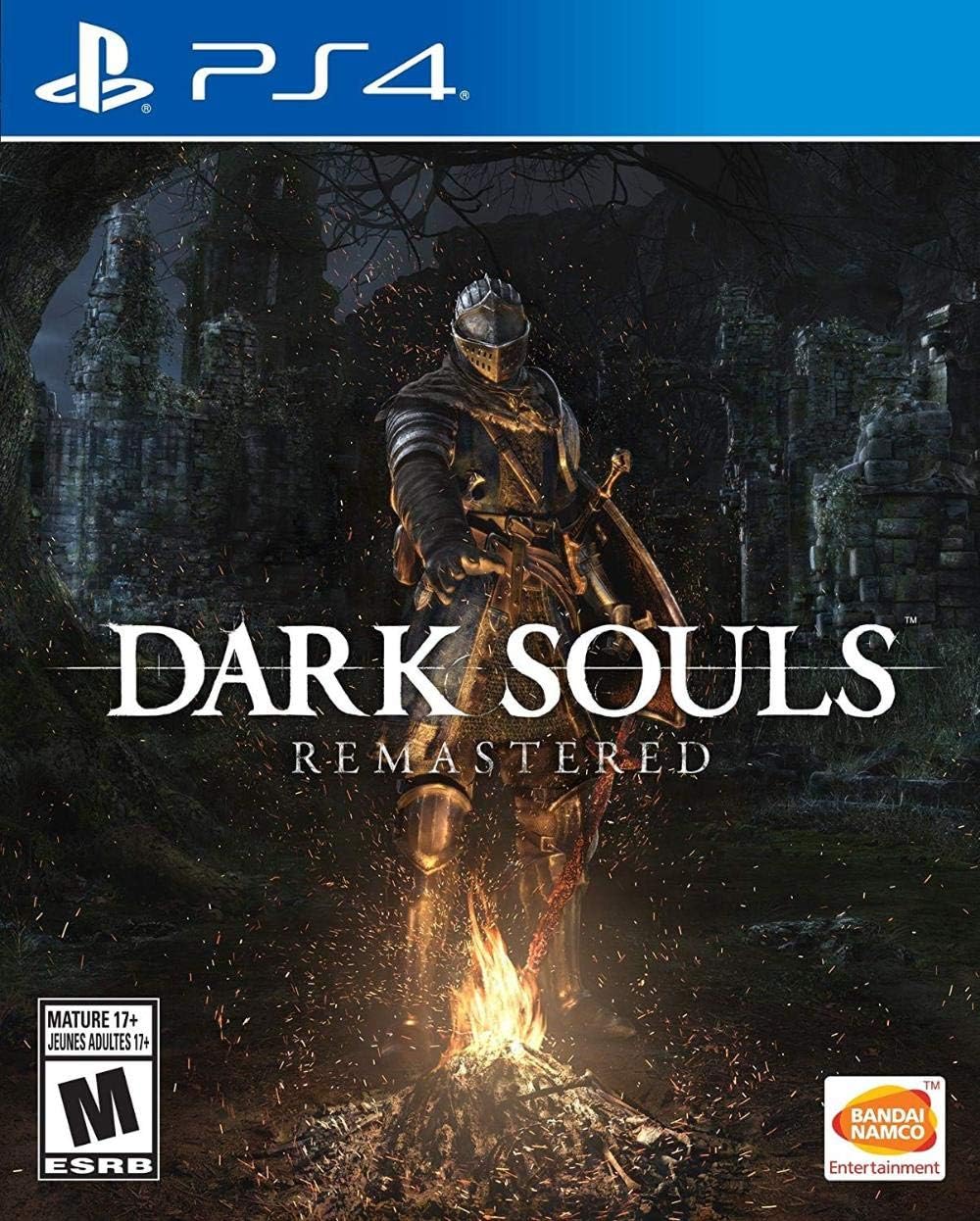
Dark Souls Remastered for PlayStation 4 invites players into a hauntingly beautiful dark fantasy world filled with intricate designs, rich lore, and endless gameplay possibilities. With hundreds of weapon and magic combinations, players can craft their unique playstyle while mastering the art of strategy. Engage with a vibrant online community through nine distinct covenants, ensuring that every adventure is as unique as the player.
O**R
Satisfied
Happy to receive it now all I have to do is install it
A**N
Dark Souls is the single best action RPG of the last 10 years
Finally a game that respects its players and doesn't treat them like children! This is very much a game for adults. Unlike many other modern video games, Dark Souls doesn't hold your hand. It can be unforgiving and frustrating at first while you learn the complex and opaque mechanics, but if you put the time in, Dark Souls is an incredibly rewarding experience. There is no better feeling in gaming than finally mastering a boss and executing perfectly to take him down. Highly recommended if you have the patience! If you're a seasoned player of the series and looking at the Remastered version specifically, the first thing I'd say is that developer From Software did an excellent job with this update. They'e stabilized the framerate and improved the textures substantially from the original. They've also included all the DLC. The only significant flaws that I can point to are threefold: 1. It took a bit of getting used to the controls in DS after From Software implemented 360 degree rolling in subsequent entries. (If you've never played DS2/DS3, that won't be an issue). This isn't a flaw per se, because I'm sure people would have been upset if they had messed with the mechanics by integrating the rolling system from futures entries, but it is a thing that holds Dark Souls back relative to future entries. 2. I wish they had revised the original DS1 trophy list to include the DLC. Instead, it's the same list as the original game (without the DLC). And unlike SotFS, the all spells/miracles/etc trophies don't include the items you pick up in the DLC, so you can platinum this game without even playing the DLC (which is included in the game). That's a bit disappointing but not enough to detract from the fun of replaying this. 3. BoC is still hot garbage.
R**O
Tough But Fair
If you have paid attention to gaming journalism and marketing since Dark Soul's original release in 2011, no doubt you've seen the phrase "X is the Dark Souls of Y. " This serves as a signifier of the game's difficulty. These comparisons, however, end there and are strained at best and reductive at worst. Possibly the most infamous of these flimsy comparisons is GamesRadar's review of the 2017 Crash Bandicoot N-Sane Trilogy. The point I'm trying to make here and this review in general, are where these games differ in how they present their difficulty. Crash comes from a time that was still very much informed by the quarter stealing coin-op games of the arcade scene, and thus derives its difficulty from very acute attention to spatial awareness and timing. Playstation 1 era controls and systems, while at their core simple, are not what today's gamers are used to and don't help with the former. The platforms/shooter Cuphead has been called "Cup Souls" for its immense difficulty, despite it being derived from the intense influence of Japanese bullet hell games. These are renowned for their immensely twitchy gameplay that relies on, like Crash, spatial awareness and timing. Dark Souls is another beast entirely. While it is comparable to the coin-ops in that most enemies kill you in 3 hits, the comparisons mostly end there. Unlike other RPGs such as Skyrim, you have to understand multiple systems at work, and button mashing will not help you. There are no magic map markers or fast travel systems (in the first 2/3s of the game at least in the latter's case). The only form of checkpoint is the game's bonfires, bases spread across the map (at max 3 in an area) that allow you to heal, restore your estus (the only way to heal outside of the bonfires besides magic spells), and spend souls in order to level up. There's no regenerating health or magic. This game does not hold your hand. It makes you explore, go slowly through the game, and use trial and error to find out what style of play works for you. The former games don't have this malleability. They have to be played in the exact right way to get from place to place. Dark Souls, however, lets you make your own path. There's no one solution to the many seemingly insurpassable obstacles that the game throws at you and the tried and true solution of most western RPGs, button mashing, is really the only patently wrong answer. The game gifts all the tools one needs right from the start. The parry, riposte, and backstab techniques are a very intuitive way to deal with a majority of the game's mob. The game stresses that enemies should be dealt with 1-on-1 and groups will often split up to help the player out with this. There is no all encompassing class like Skyrim's infamous Stealth Archer, you build your character the way you are comfortable with and it will work for you. The game awards trial and error. That's why the soul recovery system is so fantastic. If you weren't aware, once you die in Dark Souls you leave behind a glowing green pile of the souls that you have collected up to that point. These souls are a dual purpose mechanic that functions as both the game's currency for shops and XP for leveling up. I offer a 3rd function for them though: motivation to learn from your mistakes. You have to embrace the "You Died" screen; you should be learning from each death. If you don't, you lose the souls you worked so hard to get. The game awards endurance and hope. These two tools will be more powerful than any weapon on your way to the end of this game. It suffers from a third act that was rushed for time constraints. This part of the game doesn't capture the tense feelings and dread of the former part of the game, you are likely way more than powerful enough for each boss. All in all, it keeps aesthetic and requirement for strategy all the way through, so this 3rd act isn't a chore or boring. It just isn't as captivating as the earlier portions. I'd recommend this game if you have patience and a little time on your hands; a normal first time play through takes anywhere between 50 and 70 hours on average. The multiplayer in this game is really unique. If you have humanity, you can sacrifice some to unhollow yourself. This allows you to summon the help of certain NPCs and other players at various points of the game which can help for particularly tough bosses. On my first play through I had a lot of trouble maintaining humanity though and I didn't get to utilize this feature much, I had to beat Ornstein and Smough all by myself. That tested my will. Some real life assistance will surely be helpful in this game. However, reversing your hollowing also sets you up to be invaded by other players, in line with this game's faction systems. Various factions give you access to benefits such as new weapons or magic as you level up your affinity with that faction. This leveling system is based on items that you can recover from either helping or invading other players, and occasionally found in the world as loot. The invasion system is where a lot of the role playing comes in. There's a certain forest area that is guarded by a certain faction. Joining that faction and murdering incoming players is a great way to mine humanity and souls and faction items and also makes the forest hunters not attack you once you enter that area. While it does add more depth to the experience, it can be frustrating when you're in a bind nowhere near a bonfire with no idea of what to do next just to be invaded and have all your hard work erased. This isn't common but when it does happen, it can be quite the setback. However, you'll be used to setbacks with this game. The matchmaking is based on what your strongest weapon is, so if you're still trying to orient yourself in the game, maybe don't try to level up your weapons early on to avoid highly experienced griefers. That all being said, the multiplayer isn't very active as of right now. In terms of content, this is a 1:1 port of the Prepare to Die edition that includes the game and DLC. This version fixes frame rate issues that blighted Blightown and various other portions of the game. The textures are updated and are noticeably nicer than the last generation versions of this game. I originally had this on PS3 in 2014 but I "didn't get it" and dropped it after failing to get past a certain early boss that I must have tried upwards of 50 times. Even with that little bit of time spent, the graphics are noticeably nicer. Its nothing amazing; current gen games like Bloodborne and Dark Souls 3 look a lot nicer on their native consoles than this does, but the aesthetic is still here in all its gothic and depressing glory. If you played on PC, however, most of the function updates included in the mod DSFix cover the issues that console gamers had no solution for. This remaster is purely for console gamers who missed their chance last gen or those that want a more consistent and less buggy experience than what they had on PS3 or Xbox360. Good luck, Chosen Undead.
K**Y
Classic Game
Kool game, good price, fast delivery... thank you
C**.
Great Game but expect a different experience
Dark Souls is a great game, but if you're someone who has started with later FromSoftware titles like Elden Ring or Dark Souls 3 like I have, you'll have to expect your experience to be pretty difficult at first. But its still a great game that I got the hang of pretty quickly.
T**E
Prepare to Die Again
In 2009, FomSoftware released a game called Demon's Souls. Known for its difficulty and unique systems at play, the game went on to become a cult classic. In 2011 FromSoftware did a follow up title. One that would be harder and ask more of players. Marketed with the tagline "Prepare to Die," Dark Souls was an unusual game being released at a time when videogames catered more toward making the experience approachable and their stories more straightforward. Dark Souls, however, opted for a less approachable experience and a story that gave more vague hints to its lore than actual answers. If you'd asked anyone in 2011 if Dark Souls would become one of the most influential games of the last generation no one would've believed you. It flew in the face of the direction the medium was headed at the time. Dark Souls prided itself on its difficulty, it's vague lore and constantly taunting the player with how much they were going to die. If anything Dark Souls sounded like it would repel audiences more than invite. Yet the challenge Dark Souls provided was exactly what the industry was looking for at the time. It felt fresh and unique and became a very incredible sleeper hit. By the end of 2011 Dark Souls was up for an unusually large amount of Game of the Year Awards and had acquired critical success and a cult following most games simply do not achieve. This was enough to grant Dark Souls two sequels and a spiritual successor in Bloodborne. It is now not that unusual to see critics refer to games as "Soulslike," in their execution, nor is it unusual to see a few games embrace their difficulty. And while Dark Souls did not, by any means, invent the difficulty curve or anything of the sort, it's influence in the gaming industry is unmistakable. Despite two other entries, neither of them ever felt as special as that first trip to Lordran. Dark Souls Remastered allows us to step back into this familiar and terrifying world. Does it hold up as well in 2018 as it did in 2011? It turns out that it mostly does. Dark Souls has players controlling an undead character that they will create and name. After escaping the Undead Asylum they'll be thrust into the world of Lordran, a world where things look rather bleak. The fire is dying and as the chosen undead you will fight various monsters and old heroes to either reignite the flame and keep the age of fire going longer, or thrust the world into darkness for a new era. There is this misconception that the only appeal Dark Souls has is its challenge. If that was all there was to its success and fandom, however, Dark Souls would likely not be as popular as it is. A large portion of is fanbase comes directly from those trying to decipher its story and lore, and just being in the world it takes place in. Lordran is a very dark and mysterious world and this has become just as synonymous with Dark Souls as the difficulty has. Though Dark Souls story seems simple on the surface, much of its story is deliberately vague, leaving the player to piece bits and pieces together on their own. In fact, once you're about halfway through the game it helps to watch the first cutscene again because it suddenly makes sense. Dark Souls is not a game known for holding your hand in any capacity and this includes the story. Much of the story is communicated to the player through the various environments, cryptic NPCs who have either lost all hope or gone mad in some way, and various items around the world. Unlike most games, reading the item description is imperative to understanding the story and the lore of the game, and even that won't provide you all the answers. Some things you're still left to collect and interpret for yourself. Of course, if you are in this just for the challenge then there's that as well. One can get a lot of enjoyment from Dark Souls without basking in the lore. Dark Souls is best known for being challenging. When the game was marketed with the slogan "Prepare to Die," that's not just a warning. It's a promise. You will die. Over and over again. For players who accept this as an inevitability they'll quickly adapt and go forth. For players easily frustrated, however, this may not be the game for them. Especially because Dark Souls is far less forgiving in death than most games. This is still true today. Throughout the game the player will collect souls which are used as not only experience but currency. Any time the player dies they will drop their souls. You always have one chance to get your souls back, but if you die on the way, they'll be gone forever. Sure enough, death lurks around every corner. But Dark Souls is not unfair in how it distributes death. Yes, there will be times when death is inevitable, but Dark Souls is more of a stern teacher rather than a cruel one. If an enemy kills you, the enemy placement never changes. Once you know of the threat lurking nearby you'll always know of the threat lurking nearby, and as you play you'll slowly learn their patterns, movements and placements that Dark Souls goes from being rather difficult to slowly being manageable. The game is designed for you to learn from failure, adapt and succeed. This is shown greatest in the games many boss fights. The hulking demons you fight throughout the game are always a challenge at first, but as you continue to die you'll eventually learn. There's nothing greater in Dark Souls than the feeling of landing the last hit on a boss that gave you trouble. And in that moment the game celebrates your success. Bosses explode in a flash of stardust as the words "Victory Achieved" show up on screen and you're rewarded handsomely with a ton of souls. Each victory feels like an accomplishment and even though I've played through the first game numerous times, I still feel a sense of joy whenever this happens. The combat in Dark Souls is meticulous. Unlike most action RPGs, Dark Souls is a methodical combat experience. Your attacks have obvious wind up and cool down times and so do your enemies. Every attack every enemy uses is telegraphed enough for you to figure out how best to approach that particular situation and react accordingly. This is also true of bosses. However, the player is also tasked with managing a stamina gauge. So long as the gauge has a little juice left they can act. Stamnia depletes with each swing of the weapon, block of a shield or (as is the most common tactic in many situations) rolling. Learning these moments and exploiting them is the key to victory. Most failure in Dark Souls results in the inability to be patient. If you're used to games such as Bloodborne it may take time to relearn. This is particularly true as the engine in the first Dark Souls is not as fast as that of Bloodborne or Dark Souls III. Though this is also not always in the game's favor. While combat is fine in and of itself, the combat is more refined in other games that came after. None of the combat quirks of Dark Souls II or III make it in here. Duel Wielding isn't a thing you can do here and if you loved that a lot it's an adjustment here. None of this is bad, mind you, and I certainly didn't expect FromSoftware to retrofit these mechanics into the game. After all, some of the future mechanics would make Dark Souls just a bit too easy and that isn't what the game is going for. Nevertheless, the combat actually holds up surprisingly well. One area that has been vastly improved, however, is the multiplayer experience. Dark Souls is unique in that players can cooperate and go against each other in various ways. Players can join covenants that allow them to travel to other worlds and best others in PVP combat, but perhaps the most well known aspect of Dark Souls is the engagement in jolly cooperation! Not only can players invade to kill each other, but they can team up to go and challenge bosses together. In the original game the intent was to get help from a stranger. There was no way to set up local play with friends without going through tedious convoluted methods to do so. This is now simplified by allowing players to share a password and this allows for them to connect and play together far more easily. The multiplayer has also been expanded to allow 2-6 players to run around as opposed to the 2-4 previously. Dark Souls also still retains its message system. Throughout the game, you'll find messages on the ground that can provide hints (or tricks) as to what to do. If you ever feel lost, this system can give you some help. Another aspect where the game shows noticeable improvement is that it no longer suffers from some of the frame issues that plagued the original release. This is especially good for places like Blight Town, an area where the framerate notoriously dropped considerably making an already difficult area that much more difficult. Blight Town alone will make you reconsider going back to the original PS3/360 release. The game runs at 60 frames per second, and while the frame does on occasion dip and lag can settle in it's never anywhere near as bad as it used to be. The downside to all of this, though, is that making the environments look better graphically does have the drawback of making more of the blemishes stand out. Everything is sharp and crisp and that's nice, but it also means that some textures reveal themselves to look rather ugly. Also of note is that some graphical hiccups such as floating destroyed barrels and crates are far more noticeable this time around. That's not to say everything about the game has aged well. Some bosses aren't as memorable as they used to be. Some of my personal favorites are still as awesome as ever. I never tire of fighting Sif or Ornstein and Smough, but other bosses like the Moonlight Butterfly or the Bed of Chaos are not highlights for the game. Bed of Chaos in particular feels like a boss that the player needs to have a lot of luck in fighting. The game itself is still rewarding, but I'm reminded some parts of it I truly do not miss. On the other hand, though, most of the games other battles and locations hold up. Anor Londo, for instance, is still just as amazing here as it was the first time I played it in 2011, including some of its notorious difficulty areas. On the other hand, it is something of a shame that FromSoftware didn't offer up a chance for players to remix the game if they so choose like how Dark Souls II's remaster did. If you played the original Dark Souls to death everything you've done will still work here. And as Dark Souls is a game about learning and mastery you'll have already done that. This doesn't mean there isn't much of a reason to play it if you've already mastered it, but it does mean that there isn't much new being offered to you. At the very least it does come with all the DLC from before packed in as well. Is Dark Souls Remastered worth getting if you've already played it? Mostly it is. There are some aspects that haven't aged as well, but quite a bit of it has aged remarkably well. The more consistent framerate and easier time playing with friends in multiplayer make experiencing it worthwhile again. The game is also pretty gorgeous, for the most part. If you've never played Dark Souls before there is absolutely no reason to go with the original PS3/360 version. If you have and you simply want to step back into the world Lordran then this is a worthwhile investment.
M**Y
Prepare to Embrace the Abyss and Conquer Your Gaming Soul!
Attention, brave souls seeking a gaming challenge unlike any other! Brace yourselves for an epic journey into the dark and unforgiving realm of "Dark Souls Remastered" on PlayStation 4. This hauntingly beautiful masterpiece invites you to immerse yourself in a world of treacherous dungeons, formidable enemies, and a relentless battle for survival. Get ready to embark on an adventure that will test your skills, patience, and resolve to the core! "Dark Souls Remastered" takes the critically acclaimed original game and elevates it to new heights on the PlayStation 4. This visually stunning rendition breathes new life into Lordran, a sprawling and interconnected world filled with intricate level design, atmospheric locations, and a sense of foreboding that permeates every corner. The remastered version showcases enhanced graphics, improved lighting effects, and a buttery-smooth framerate that ensures every moment is a visual feast for the eyes. But be warned, for the world of "Dark Souls" is not for the faint of heart. Prepare to face off against a relentless array of monstrous foes, each more challenging than the last. Every battle is a true test of skill and strategy, demanding precision, timing, and a deep understanding of your enemy's weaknesses. The combat system is a delicate dance of offense and defense, rewarding calculated risks while punishing careless mistakes. With each victorious encounter, you'll feel a surge of adrenaline and a sense of accomplishment that few games can replicate. The lore of "Dark Souls" is a captivating tapestry that unfolds gradually as you explore the world. The game leaves much to interpretation, inviting players to piece together the intricate narrative through cryptic item descriptions, enigmatic characters, and subtle environmental storytelling. It's a testament to the game's depth and attention to detail, rewarding those who venture deeper with a rich and immersive lore that adds another layer of fascination to the experience. While "Dark Souls Remastered" is undoubtedly challenging, it's also a masterclass in game design. The difficulty is never unfair, but rather a means to test your mettle and push you to improve. With every defeat, you'll learn from your mistakes, adapt your strategy, and grow as a player. The satisfaction that comes from overcoming seemingly insurmountable odds is unparalleled, creating a sense of accomplishment that lingers long after the game is turned off. In addition to the remastered visuals, the PlayStation 4 version of "Dark Souls Remastered" offers a seamless multiplayer experience. Engage in jolly cooperation with fellow players to tackle challenging boss encounters or test your skills against other adventurers in intense player-versus-player battles. The online component adds another layer of depth to an already immersive world, fostering a sense of community and camaraderie among players. On a technical level, "Dark Souls Remastered" on PlayStation 4 excels. The game runs smoothly, and the controls feel responsive, ensuring that every death or victory is a result of your own actions. The remastered edition also brings improvements to the game's performance and optimization, making it the definitive version for both newcomers and fans of the original. In conclusion, "Dark Souls Remastered" on PlayStation 4 is a masterpiece that challenges, captivates, and rewards in equal measure. It's a testament to the brilliance of game design, delivering an immersive world, challenging gameplay, and a sense of accomplishment that few games can replicate. So, don your armor, unsheathe your blade, and prepare to embrace the abyss as you embark on a journey that will test your gaming soul like never before!
J**N
Muy bueno!!
Funcionamiento excelente, buen precio y rápido envío, estado nuevo.
J**N
Nice and fast
The game came very quickly and was also in English! So if you are worried about the game being a Japanese copy, worry not, the game is in English!
W**A
Avaliação
Tudo certo e pontual 10/10
M**E
Still a challenging game like the original.
Bought this game and Dark Souls 2 after playing both of the originals on the PS3. FromSoftware makes one of the most challenging games, hands down. They are challenging and fun. Guarantee to die multiple times. The remaster version graphics are a upgraded a bit compared to the original. The bosses are tough. Can't really recall the storyline that much due to all the dying and retrying I went through. Overall, big fan of the franchise!
G**M
Dark souls remastered
Best game I ever played
A**I
Buen juego:DD
llego lo que esperaba en perfectas condiciones:D Es un juego muy difícil la vrd pero te enganchas a el
Trustpilot
2 weeks ago
3 days ago