Desert Online General Trading LLC
Dubai, United Arab Emirates
Desert Online General Trading LLC
Dubai, United Arab Emirates


🎶 Elevate your sound game—because your ears deserve the best.
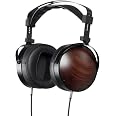
The Monolith M1060C headphones feature advanced planar magnetic drivers with a new symmetrical magnet structure for low distortion and high efficiency in a closed-back design. Engineered for audiophiles needing noise isolation, they combine superior sound clarity with plush faux leather ear pads and a padded headband for extended comfort. Compatible with any device sporting a 3.5mm jack, these over-ear headphones include a detachable cable and come with a 5-year warranty.


| Age range (description) | Adult |
| Material | Faux Leather, Plastic |
| Specific uses for product | Music Listening |
| Recommended uses for product | Music Listening |
| Compatible devices | A wide range of devices with a 3.5 mm audio jack or compatible adapter |
| Control type | Media Control |
| Cable feature | Detachable |
| Item weight | 1.77 kg |
| Water resistance level | Not Water Resistant |
| Frequency range | 20 Hz - 20,000 Hz |
| Package type | Standard Packaging |
| Unit count | 1.0 Count |
| Style | Monolith M1060c |
| Product Dimensions | 32 x 31.24 x 13.72 cm; 1.77 kg |
| Form Factor | Over Ear |
| Antibacterial treatment | Padded |
| Is assembly required | No |
| Warranty description | 5 |
| Batteries required | No |
| Import designation | Imported |
U**R
Amazing planar magnetic drivers, but rather flimsy headband.
Ordered this on Amazon (from Monoprice UK) on 4 April 2019 and paid £280.99 inc free delivery, which only took 3 days to arrive.PHYSICAL DESIGNThere is a right-angle jack plug pictured in photo, but mine came with a straight version of this plug.Compared to my Beyerdynamic DT770M (excellent closed-back circumaural dynamic headphone) which I've owned for years and know very well…The M1060C acoustic isolation is borderline inadequate for a closed headphone - because the clamping force is too weak due to the flimsy headband. Compared to the Beyer DT770M with 35dBA isolation, the M1060C is just not in the same league, although still miles better than open headphones in that regard. Obviously you can increase isolation by manually pushing the earcups down hard, but you really want a decent headband to do this job for you.Monolith cable is about 2.15m / 7 feet, and frankly too short for my liking vs Beyer cable about 3.36m / 11 feet, much more convenient for studio recording work, especially if you're moving around, playing a musical instrument. [ EDIT - I have since upgraded to a new 10 foot cable, which only cost £14.99... see link below ]https://www.amazon.co.uk/gp/product/B07X86RHJ2/ref=ppx_yo_dt_b_asin_title_o00_s01?ie=UTF8&psc=1Monolith factory cable also has rather bad microphony (picks up every little movement or tap sound, or even unscrewing the 1/4 jack adapter at other end of cable while wearing phones!) and likewise, tapping the metal headband or the wooden clamshell earpiece is also very microphonic and excites an obvious long-decay pitched resonant ring from the metal headband itself.Two-sided earphone cable connection is less convenient than one-sided Beyer style.Monolith supply a large, round, zip-up soft carry case (inside their square cardboard package box) which is pretty tough and keeps headphones snug inside, except there's only barely enough room for the 2.5mm plug connectors to remain inserted into each earpiece while phones are stored back in this case (they will just fit if you bend their cables 90 degrees, and wrap them round the case inside perimeter) which seems to put a little bit of strain on plug joint. Also, like this, there's nowhere much else for the dangling lead to go except draped over the top of phones where jack plug might scratch them. There is a velcro pocket inside the case lid opposite, but it's a silly stretch when cables are still attached. It looks as if Monolith expect you to unplug both cables every time you put phones back away inside case?! Surely I'm not the only person who thinks it's better to always leave cable connectors plugged in - both for convenience and time-saving, and avoiding L/R confusion, but mainly to save needless repeated wear and tear on the little jack socket contacts which will probably go crackly and intermittent if they're constantly pulled in and out thousands of times over. Given such a big soft-case, it should accommodate everything inside better than this!No visible L or R indicators on the actual headphones, although L and R are printed on the cable 2.5mm plugs. FYI the headphones earpad cushions are tapered in profile, intended for the thicker, deeper cushion edge to go behind the ear against head and the slimmer, shallow cushion edge to go in front of ear against cheek. This shallow cushion has a visible seam halfway up the front edge, just the same as Audeze designs - the slanting earpad also helps to aim the sound into your ear slightly more from your front, rather than square on from side. This earpad profile actually dictates which is Left and which is Right driver on the headphones, although they're still fairly comfortable to wear even if you have them opposite way round, mostly because the earpads are so thick anyway and the flimsy headband is very loose and there's almost no real clamping pressure.Due to the overly wide, flat contour of metal headband top, the padded strip is stretched too much and rests most of its weight only at the very top of your head in one point, hence is rather uncomfortable. If it could curve in more of an arc around the head, it would probably feel better, but if you pull the adjusters down much to attempt that, it becomes too small to fit your head anyway. Not a great design! Possibly aftermarket 3rd-party headbands with yokes that will encompass up to 110mm spacing could be the answer. I think AliExpress offers such a model by Leagginal that might do the trick, but I've never tried it.The cushions are only glued onto the earpieces, and I don't think it would take much force for them to rip apart. You can hear a worrying creak and glue tearing noise whenever you squeeze the cushion too much, so be careful.The big ear cushions are basically comfortable though, and although M1060C are slightly on the heavy side for closed circumaural phones, they're far more bearable than nasty on-the-ear supra-aural designs like Grado with painfully high clamping force. Full circumaural designs can allow higher clamping forces more smoothly with far less discomfort.If Monolith only had a decent headband with nice strong clamping force, it would be perfect with these big soft cushions. I've tried a few Audeze LCD models and they do have stronger clamping force and feel more secure.SOUND QUALITYObviously the Monolith M1060C is basically a made-in-China copycat version of the famous California brand Audeze LCD-XC closed-back model which retails at $1799, and it shares similar 106mm nominal size planar magnetic drivers, similar Neodymium N50 magnets, similar impedance (18 ohm vs 20 ohm), similar "10Hz-50kHz" quoted frequency response (sic) and 5 watt max power. Some things are different, like having ten times worse THD at 100dBSPL, and 10dB lower sensitivity, and 10dB lower peak SPL output, and not having Fazor phase-plug waveguides, or a hardshell Peli case, but you get what you pay for.I've tried the closed-back Audeze LCD-XC myself at a hi-fi demo, along with open-back LCD-2, LCD-3 and LCD-X and can honestly say Audeze's closed LCD-XC was easily the worst of the bunch with a pronounced nasal midrange honk, much like cupping your ears. Their open-back models were far nicer, albeit all rather warm (softer treble) and while the higher sensitivity output LCD-X probably was the most flexible all-round option for most people (especially with an iPod), if you had enough money, the LCD-3 was easily superior sound to the rest. (This was a few years ago before the LCD-4 came out.) I've wanted a pair of LCD-3 ever since I heard them, but they're very expensive, and also (as a musician) I much prefer closed headphones to open for my practical use. When Monolith came out with these low budget alternatives, it was a no brainer to at least give them a go.I was quite worried the Monolith M1060C would have the same nasal midrange bark as I remember hearing on the closed Audeze LCD-XC, being a similar design - but actually, it's far less obvious with the M1060C, and I'm very pleasantly surprised. Possibly the LCD-XC only sounded "bad" to me right next to the absolutely sublime LCD-3, which is hardly a fair test for any closed headphone to hold up against, but I heard what I heard. Furthermore, I'm pleased to say, the M1060C is not obviously "dark" in the treble or "warm" coloured like the open Audeze LCD models were, but is bright enough to be considered "normal" or "acceptable." I have old pair of Sennheiser HD600, and they are quite obviously brighter than M1060C but to be honest a little too bright and shrill at high volumes. The planar magnetics seem to have more transparency than any of my dynamic headphones, so the treble feels clearer, less harsh edge, and I feel more comfortable turning the volume up loud on them than the HD600 certainly. Less fatigue, less distortion, less aggressive, more like my A.M.T. tweeters on my main speakers.The M1060C midrange peak is just noticeable - a broad rise, rather than a sharp peak - it's not painfully bad or annoying - but maybe I'm too forgiving, being so acclimatised to my Beyer DT770M closed dynamics which are quite strongly peaked in their low midrange. The M1060C sound much flatter than Beyers in direct comparison (once volumes are matched obviously!) but I'd still always choose DT770M if recording a vocal, because their greater isolation gives less bleed into the microphone.Deep low bass extension was the main area that seriously impressed me when I heard the Audeze LCD models, which set them apart from lesser planars like Hifiman HE560 with their smaller 75mm drivers, and I was really hoping that trick would be replicated by the M1060C equally with their 106mm planar drivers. In my opinion, they're not as good as the Audeze, and although I can still easily hear all the low bass on the M1060C down to below 20Hz on my sweep test, they just don't have that X factor magic ingredient the Audeze's had which I can't put my finger on... Maybe it's that combination of warm, dark tone (soft treble and scooped upper mids) with very deep bass extension and slam that encourages you to turn the volume up stupid loud on a hip-hop track and really get your head nodding along, without any of the usual harsh ear fatigue you'd get from anything else, that makes you love that Audeze signature. But I think, in hindsight, it's actually the sheer novelty, the surprise, the first impression "wow factor" of never having heard a big planar headphone like Audeze before, that could do bass properly, that blew my mind how good they were - especially as I'd always thought open back headphones were weak on bass - so this first ever Audeze LCD experience of groundbreaking bass reproduction in headphones gets very fondly remembered as being totally amazing! After that, any other headphone you try subsequently cannot break new ground that has already been broken for you, and can never impress you as much once you're starting now with such lofty preconceptions of what amazing, freakish bass you're expecting a big planar to deliver. Maybe if I hadn't ever heard an Audeze LCD model, I'd be blown away for the first time ever by the amazing performance of the planar Monolith M1060C bass, because in truth, it is amazingly good at the low end - sounding miles better than any other headphones or earphones I've owned before.I've been swapping back and forth between my Beyer DT770M closed dynamics, my Sennheiser HD600 open dynamics, Etymotic ER4S in-ears, and the new Monolith M1060C closed planars, using my RME ADI-2 Pro FS BE as a reference DAC because it has two identical headphone preamp outs which can be calibrated individually, to facilitate quick swaps and fair comparisons at same SPL, and also tried things through my Behringer X32 mixer (also has two identical headphone sockets), and my Kawai digital piano, and my Apple iPod Classic 256GB SSD, and haven't had any problems driving phones to an acceptable volume (iPod is least powerful) or struggling to drive the low 18 ohm impedance (I was a little worried as most pro phones are much higher impedance.)Over time and maybe some objective measurements, I might decide to try a little bit of corrective EQ with these phones (RME ADI-2 Pro FS is perfect for this) but it barely needs much, if any. In general, these already sound easily as good, or in fact, way better than any of my other headphones, and for this low price I'm very pleased. As an ultimate audiophile solution, one might need to look into electrostatics like Stax for higher transparency. I've heard some Sennheiser electrostatics many years ago and they were the most clear transparent phones I'd ever heard, but open-back and thin bass, and restricted SPL, and rather fragile, so maybe planar magnetics offer the best all-round balance of high SPL, powerful deep bass extension, and excellent transparency, plus planar's almost linear phase vs frequency response graphs, and don't require any extra electronics box at the front end like electrostatics do. One day, I might be able to afford Audeze LCD-4, but for less than 10% of the cost, these Monolith M1060C are a bargain!
A**S
Heavy on the head, not the pocket
TL;DR : These are great. Fantastic quality, fantastic sound, fantastic value. But while very comfortable, they weigh a ton.I make music, and since most people listen to music on headphones now I have a somewhat extensive collection of headphones to check my mixes with. One of the most individual sound signatures I've found so far has been magnaplanar headphones, and one of the most enjoyable. To capitalise on this sound signature, most magnaplanar headphones tend to be of an open design. The instrument separation is, to my ears, in a totally different class to all the dynamic phones I own.These Monolith M1060C headphones, however, are closed back magnaplanars. There aren't many of these around; the one that springs to mind is Audeze's LCD-XC which is over a thousand pounds. And these 1060s share a *notable* number of similarities to those... Except the price.The obvious main advantage of closed back headphones is sound leakage. When listening to open backed magnaplanars *everyone* in the room (sometimes the whole studio) knows what you're listening to. While I wouldn't use these 1060s to monitor while recording into a microphone (there's still more leakage than from phones like HD25s or DT770/150s) they're phones with a good social conscience. You could listen in an office without unduly rubbing your colleagues up the wrong way.But a secondary advantage is that the closed design does change the sound signature again. It's neither like open backed planars, nor like closed back dynamics. Nor really in between; it has elements of both, but it's a third thing.The detail is all there, and the separation, and the sense of space. But that space does feel enclosed, private. Not in a bad way - these do sound like closed cans, but the most spacious I've heard, and a well defined space at that.The components feel high quality, especially the earcups which have beautiful wood, and very plush asymetric earpads, some of the best I've ever seen or felt. But - and here's the but - they need to be, because these cans weigh a TON. I think they're the heaviest I possess by a factor of 50% at least. Despite this, they're also (thankfully) one of the most comfortable pairs I've ever worn, and I've done some long hours wearing these with no discomfort at all.(Ok, turn away now if you're an audiophile...)Some phones are designed to be flat response, and are best listened to that way. Monitors, really. Some really benefit from a tweak of eq. I added a touch to these, rounding out the bottom and the barest touch in the upper mids and lower treble and they came ALIVE. By some degree these are now my favourite leisure headphones, and I'm revisiting all my favourite music like I'm a teenager again. Which, indeed prompted me to write this review. (You may not feel any need to eq these at all for this effect - I'm old, and rock guitarists have robbed me of some upper frequencies.)Are they as good as Audeze closed planars? I don't have any here right now, but from memory I would say these lack a tiny bit of the smooth finesse of the LCD-XC, and may not be as flat response. But they're high quality closed back planars for less than a fifth of the cost. I'd really need convincing to spend all that extra money. In fact I can't think of a pair of headphones in the £200 price range that can touch these, apart perhaps from Massdrop's HE 4XXs - also planars, but open backed, and very different sound signature.Basically, as far as I know, nothing else sounds remotely like these under a grand!
A**H
A 2in1 pair of headphones.
A very reasonably priced pair of headphones. Easy to drive and can be used closed or open.
M**Y
Hard To Beat
First off let me just say that I'm no audiophile. I'm not qualified to go into the technical detail of these headphones that one or two other reviewers have, nor have I tested or owned any other high-end headphones. All I know is that, after watching countless reviews on Youtube by ZReviews and others, I took the plunge with these. Closed-back was a must for me, and many reviews talking about sheer sound quality and value for money kept me coming back to these.Having lived with them for a couple of weeks now, I can say these are easily the best headphones I have ever heard. Maybe there are others out there which are better, but not all of us can afford £500+ on a set. I had concerns regarding the build quality and comfort, based on a lot of comments, but I honestly have no roblem with either. They are massive when you take them out of the box, but I've got used to them now. And despite the size, I'm very happy with them.Sound-wise the M1060C is superb, coupled with my FIIO M11. What an upgrade from my old IPod Classic & cheap Sony earphones! I'm not about to mod these in any way, take off the cups or ear pads and apply felt or whatever - I just don't see the need. Maybe my ears aren't as good as other people's when they talk about a "ringing" sound with these - there do seem to be a lot of nit-pickers out there in the audiophile community.All I know is that when I listen to music with this set up I've never heard music sound better. The bass is out of this world, without being over-powering or distorted. The mids and trebles are nice without being shrill. And as I said at the start, I have no issues regarding the comfort, fit or quality control.
Trustpilot
1 month ago
5 days ago
1 month ago
2 weeks ago